Work Space in Living Room Interior Design: Stylish Ideas for a Functional Home Office
Creating a work space in living room interior design is a smart solution when you need a productive place to work but do not have a separate home office. With the right layout, a living room can comfortably combine relaxing, entertaining, and working without looking cluttered or overly corporate. The key is to make the workspace feel like a natural part of the room rather than an afterthought. From compact desks tucked into unused corners to beautiful built-in workstations, there are plenty of ways to make the arrangement both practical and stylish.
1. Create a Workspace in an Empty Living Room Corner
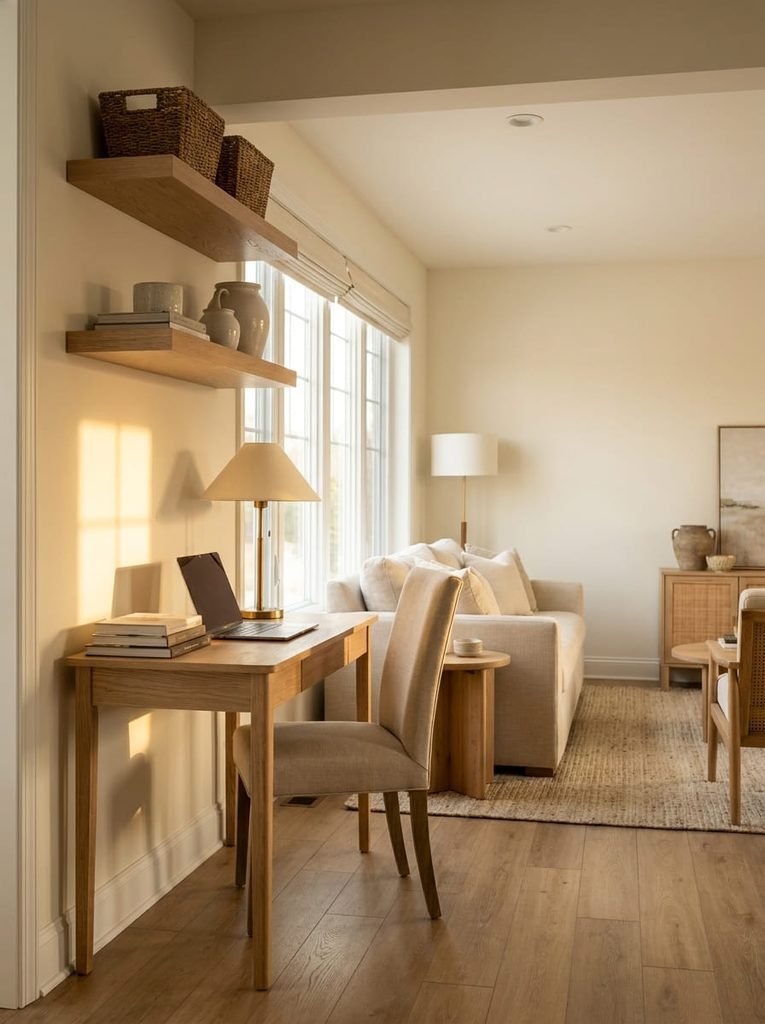
An unused corner can become one of the easiest places to add a workspace to your living room. A slim desk, comfortable chair, and small lamp are often all you need to create a functional setup. Positioning the desk against a wall keeps the center of the living room open and allows the workspace to visually blend into the existing furniture. Add one or two shelves above the desk for books, baskets, and decorative objects so the area feels intentional.
2. Add a Built-In Living Room Workstation
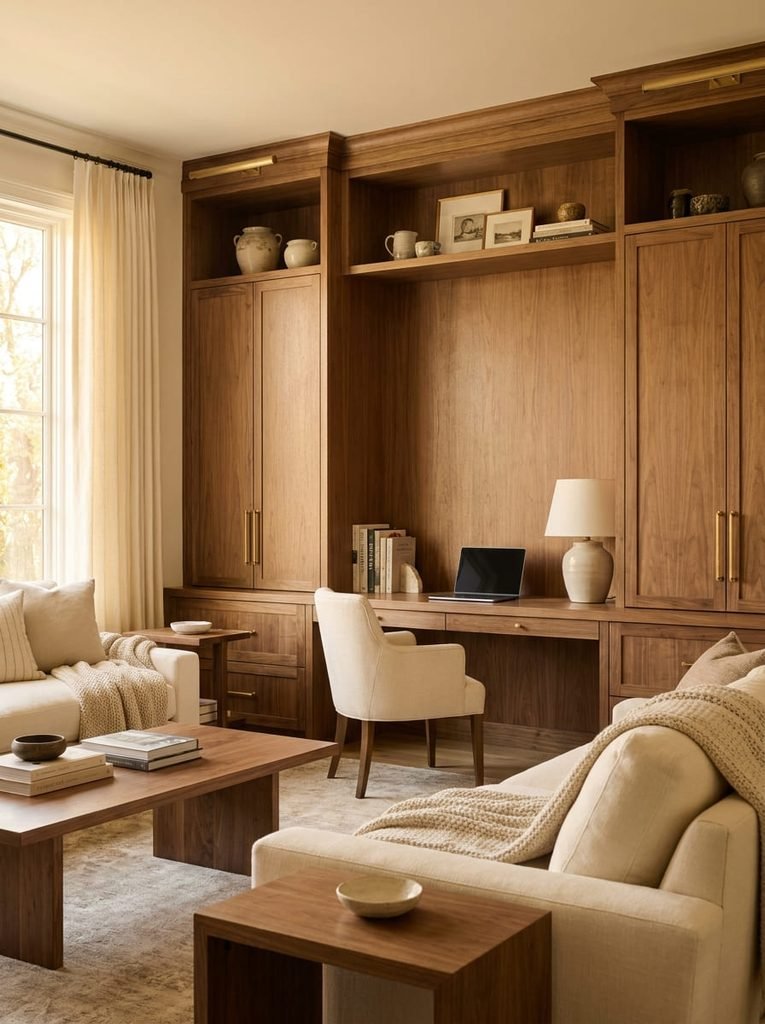
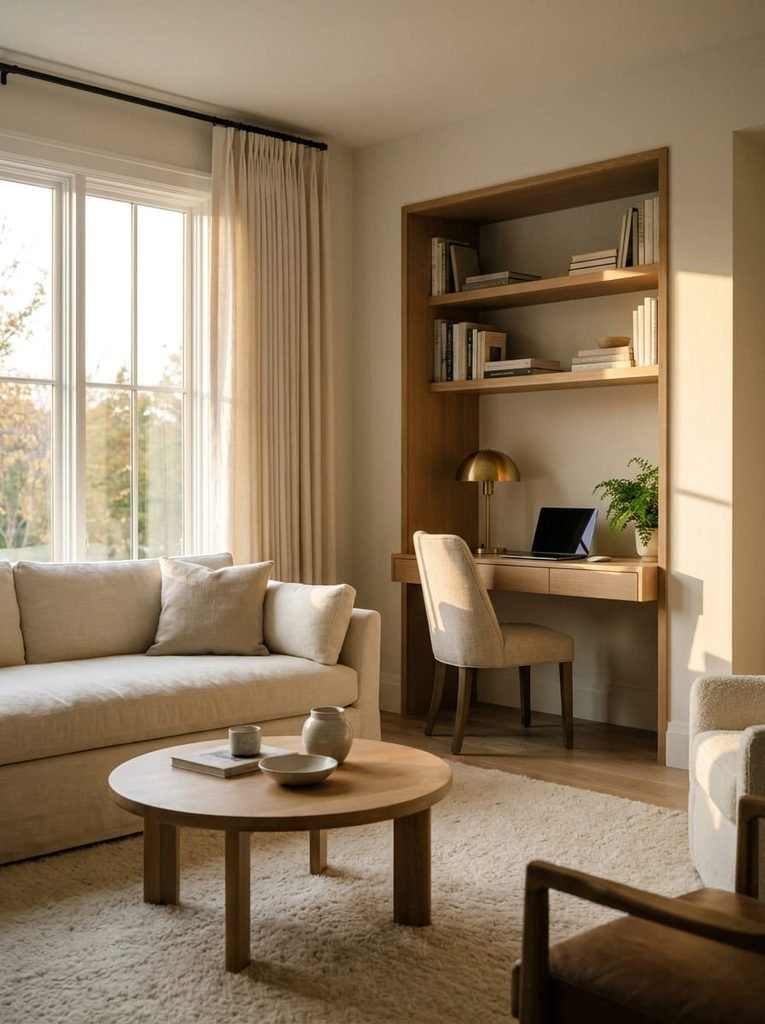
If you want a more permanent solution, consider a built-in workstation designed specifically for your living room. A custom desk can be fitted between cabinets, beside a media unit, or along an otherwise unused wall. Matching the cabinetry to the living room furniture makes the workspace look like part of the original interior design. Closed storage is especially useful because you can hide paperwork, chargers, office supplies, and other items when the workday is finished.
3. Use a Small Desk Behind the Sofa
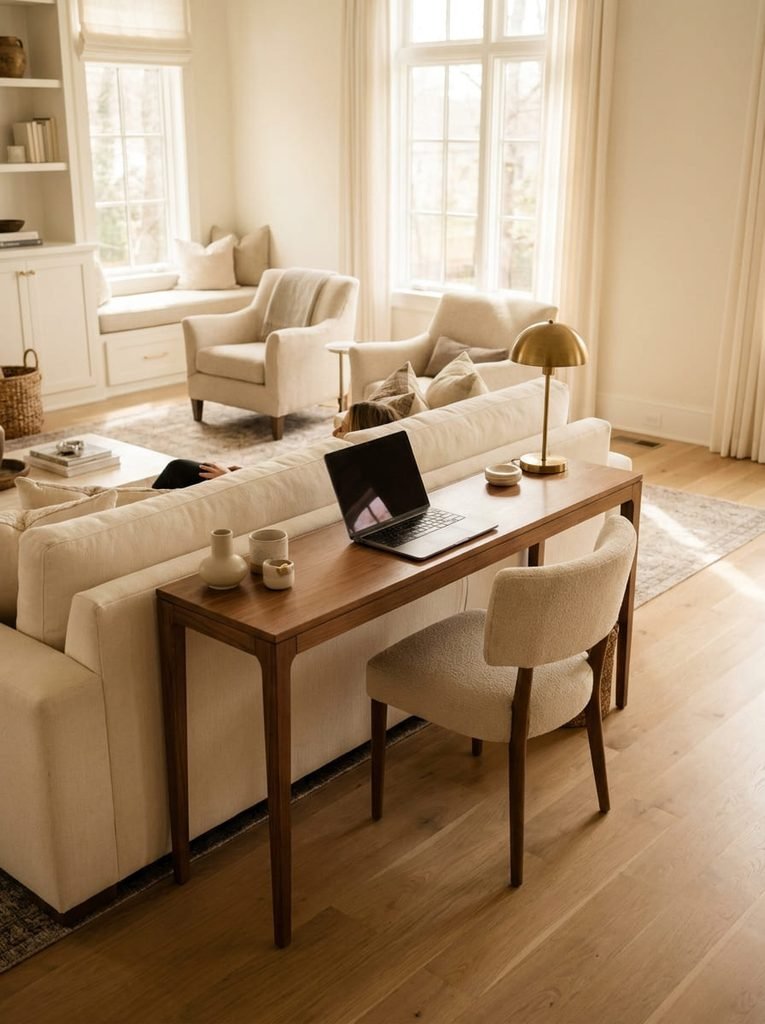
The wall behind a sofa is often overlooked, but it can provide valuable space for a home workstation. A narrow console-style desk can sit directly behind the sofa while still leaving enough room for comfortable movement. This arrangement works particularly well in open-plan living rooms where you want the workspace to remain connected to the main room. Choose a desk with clean lines and keep accessories minimal so the area does not visually compete with the sofa.
4. Turn a Living Room Alcove Into a Home Office
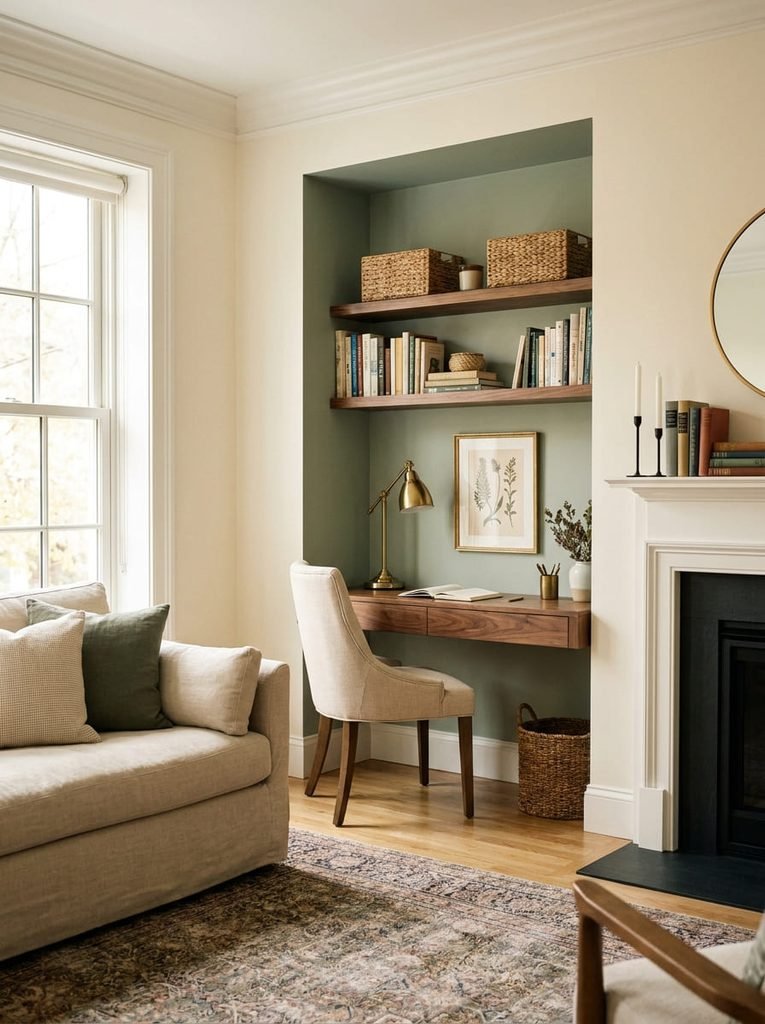
A small architectural alcove can be perfect for creating a dedicated work zone. Instead of trying to fill the space with furniture, use the existing shape of the room to your advantage. A wall-mounted desktop can provide plenty of workspace while taking up very little floor space, and floating shelves can provide vertical storage. Painting the alcove in a slightly different but complementary shade can also make it feel like a defined workspace without completely separating it from the living room.
5. Choose a Floating Desk for a Small Living Room
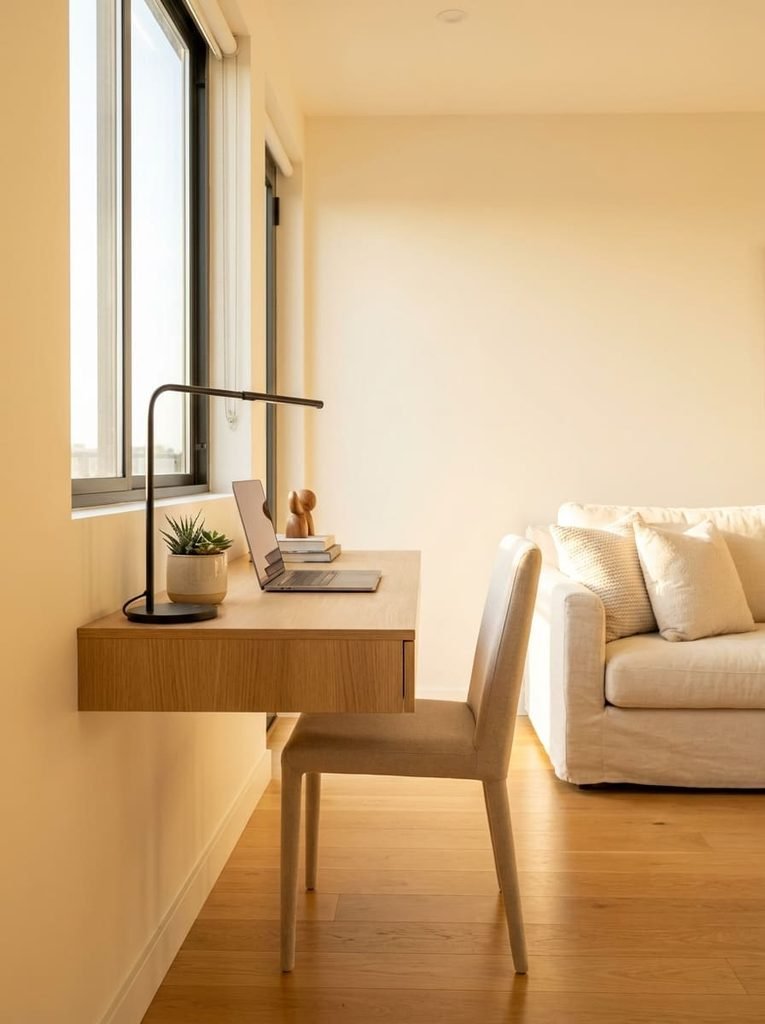
A floating desk is an excellent option when floor space is limited. Because it attaches directly to the wall, it eliminates the visual bulk of traditional desk legs and keeps the floor underneath open. Pair it with a simple upholstered chair that can be pushed completely underneath the desk when you are finished working. This creates a workspace that practically disappears into the living room when it is not being used.
6. Design a Window-Side Workspace
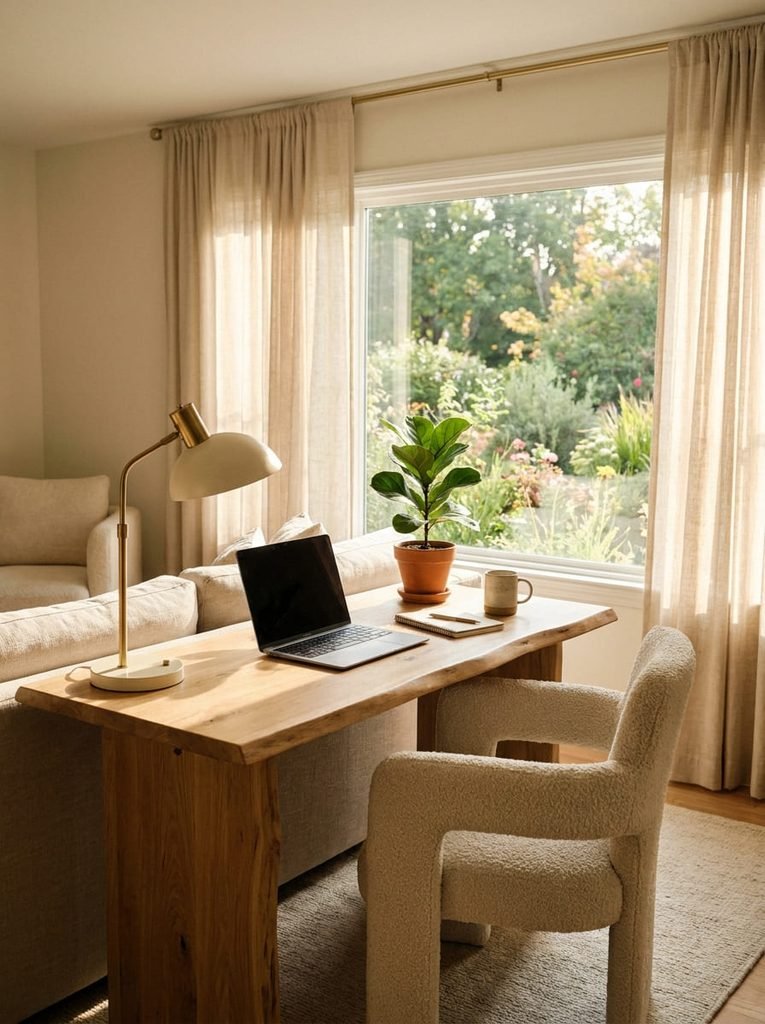
Natural light can make a living room workspace feel brighter and more inviting. If your room has a wide window or an unused section beside it, consider placing a desk there to take advantage of daylight. Keep the desk relatively simple so the view remains the main feature, and use light-filtering curtains if glare becomes an issue. A small plant, textured chair, and attractive desk lamp can make the area feel more like a comfortable design feature than an office.
7. Combine a Bookshelf With Your Workspace
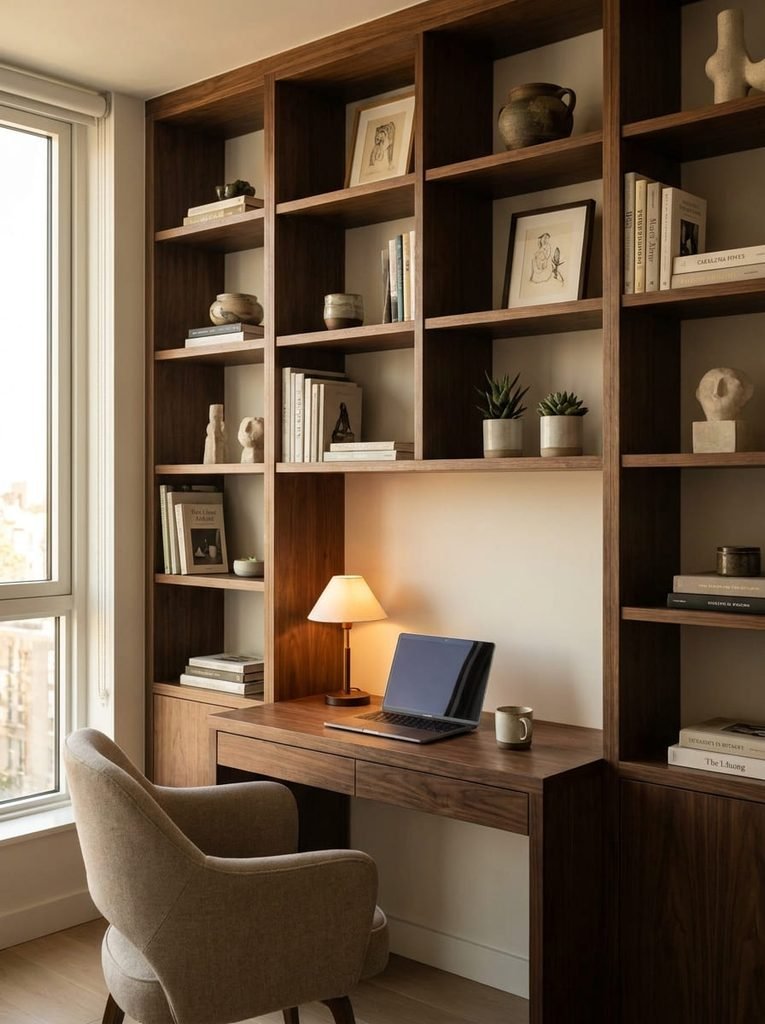
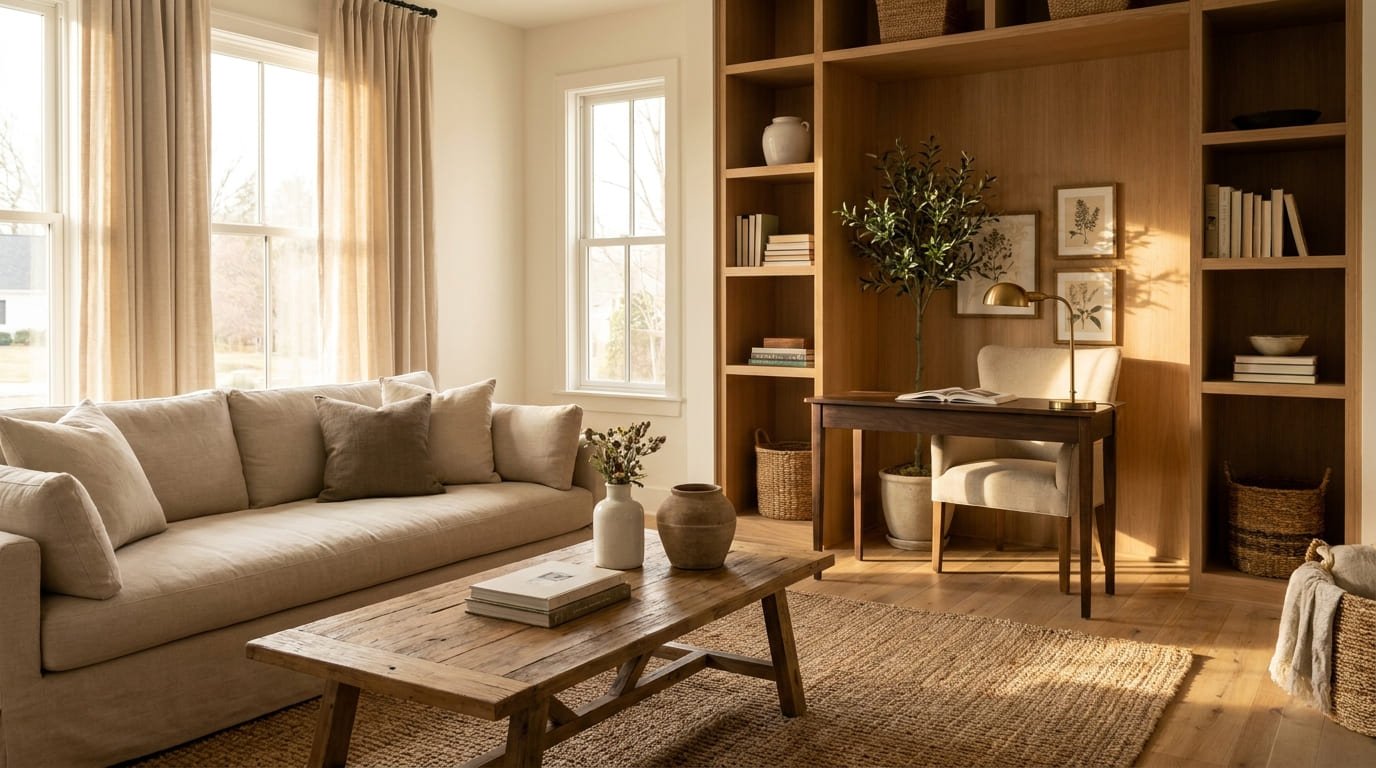
A bookshelf and desk combination is a practical way to create a workspace that also contributes to the living room’s personality. Install open shelving above or beside the desk and mix books with artwork, ceramics, framed photographs, and plants. This prevents the workspace from looking overly utilitarian. Using the same wood tone or finish throughout the shelving and desk can make the entire arrangement feel cohesive.
8. Create a Hidden Workspace Behind Cabinet Doors
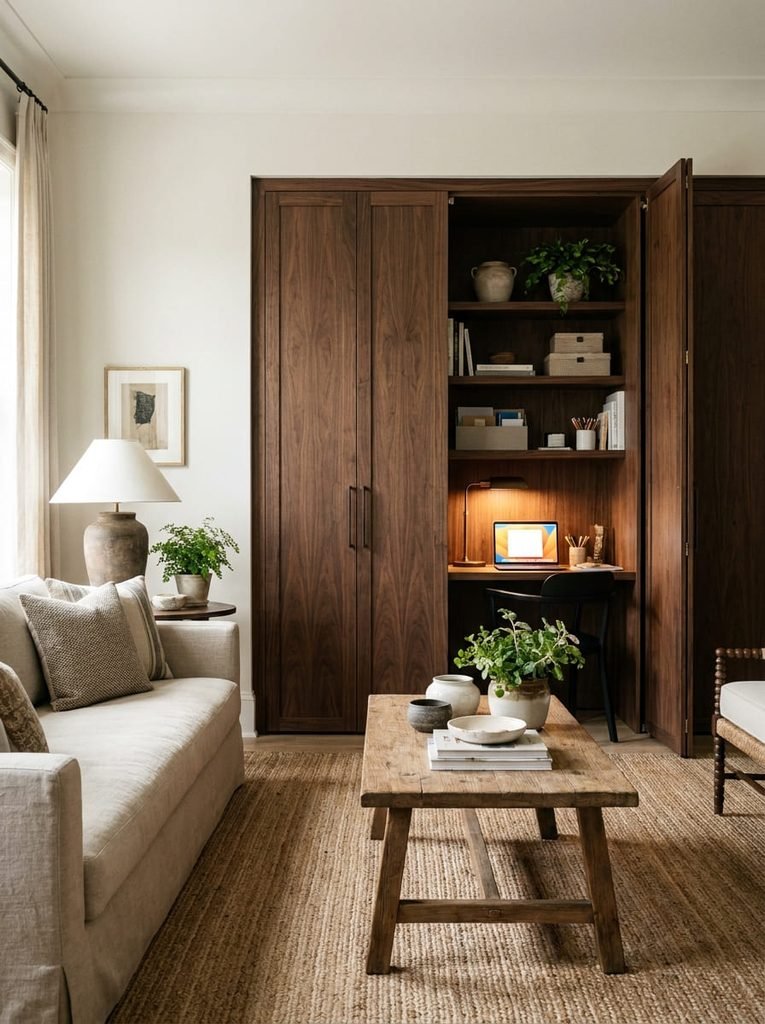
For people who do not want to see office equipment when relaxing, a hidden workspace can be an ideal solution. A cabinet or built-in storage wall can contain a compact desk, monitor, shelves, and office supplies behind doors. When work is finished, simply close the doors and the living room immediately returns to its normal appearance. This idea is particularly effective for smaller homes where one room needs to perform several different functions throughout the day.
9. Make the Workspace Match the Living Room
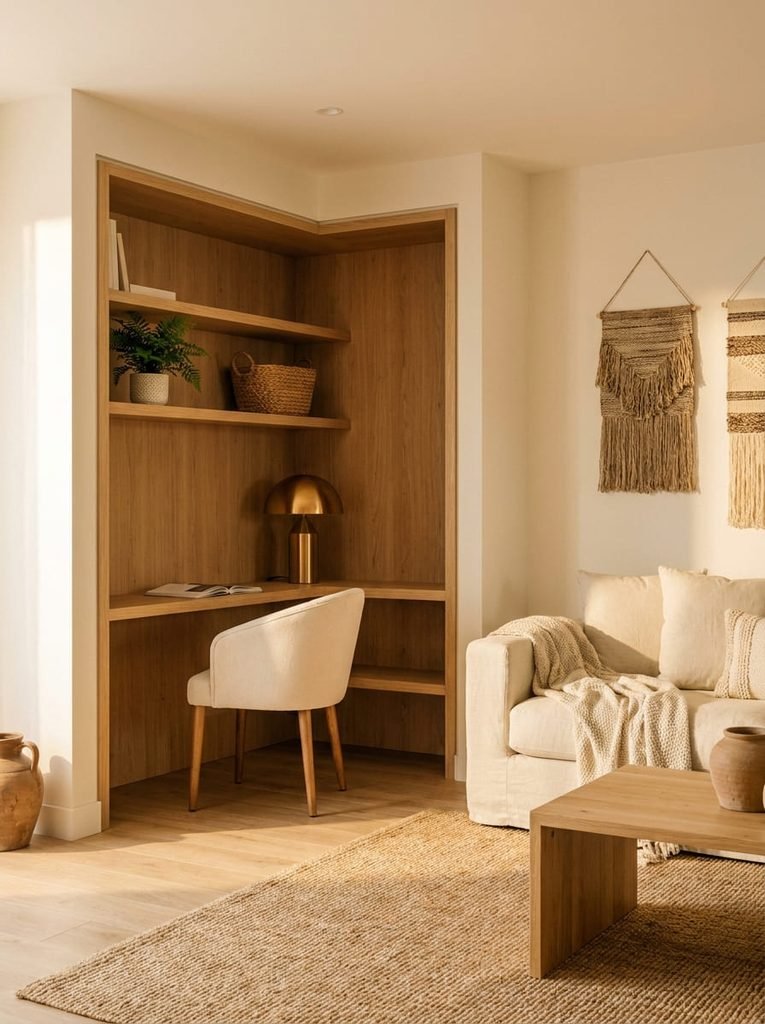
One of the biggest mistakes when designing a living room workspace is choosing office furniture that looks completely unrelated to the rest of the room. Instead, select materials, textures, and finishes that already appear elsewhere in the space. For example, a natural wood desk can complement a wood coffee table, while a cream upholstered chair can echo the living room sofa. When the colors and materials connect visually, the workspace feels like part of the interior design rather than a separate office.
10. Use a Room Divider to Define the Work Zone
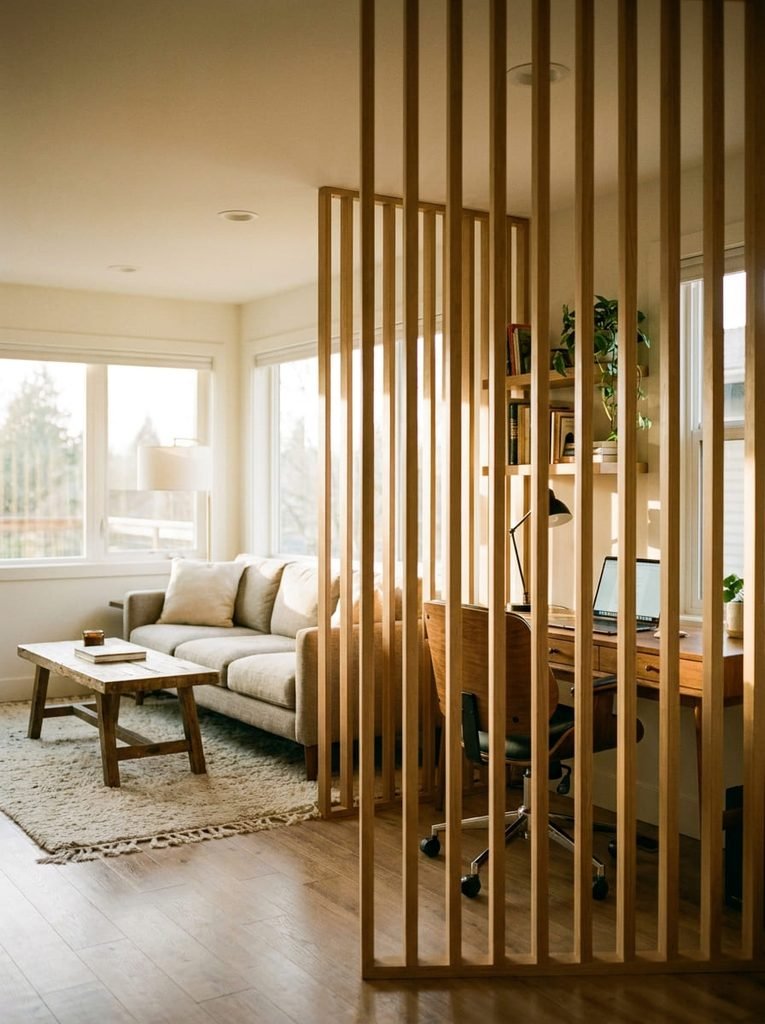
If your living room is large or open-plan, a subtle divider can help establish a dedicated work area. A slatted wood screen, open bookshelf, curtain, or strategically positioned console can separate the desk from the seating area without blocking natural light. The goal is not necessarily to create a completely enclosed office. Instead, the divider provides enough visual separation to signal that one area is for work while another is for relaxation.
11. Try a Minimalist Living Room Desk Setup
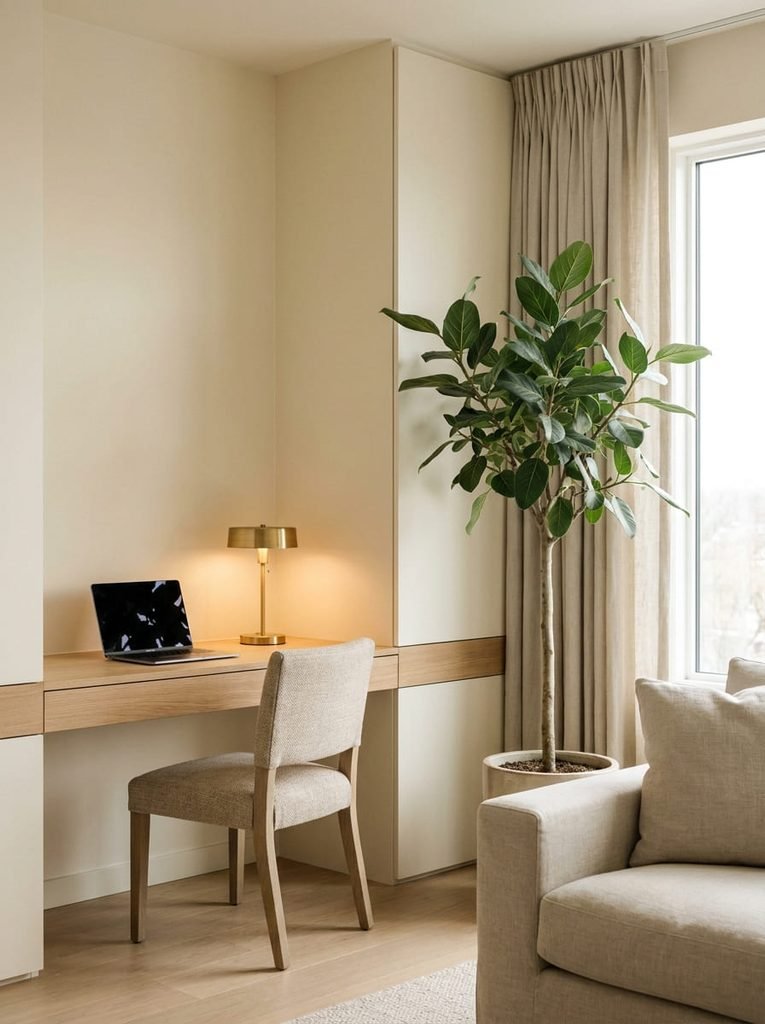
A minimalist workspace can work beautifully in a modern living room because it does not introduce unnecessary visual clutter. Choose a streamlined desk, comfortable chair, small task lamp, and only the accessories you genuinely need. Cable management becomes especially important in a minimalist setup, so hide wires whenever possible. A single piece of artwork or a small plant can add personality without turning the desk into a crowded office station.
12. Create a Warm and Cozy Work Corner
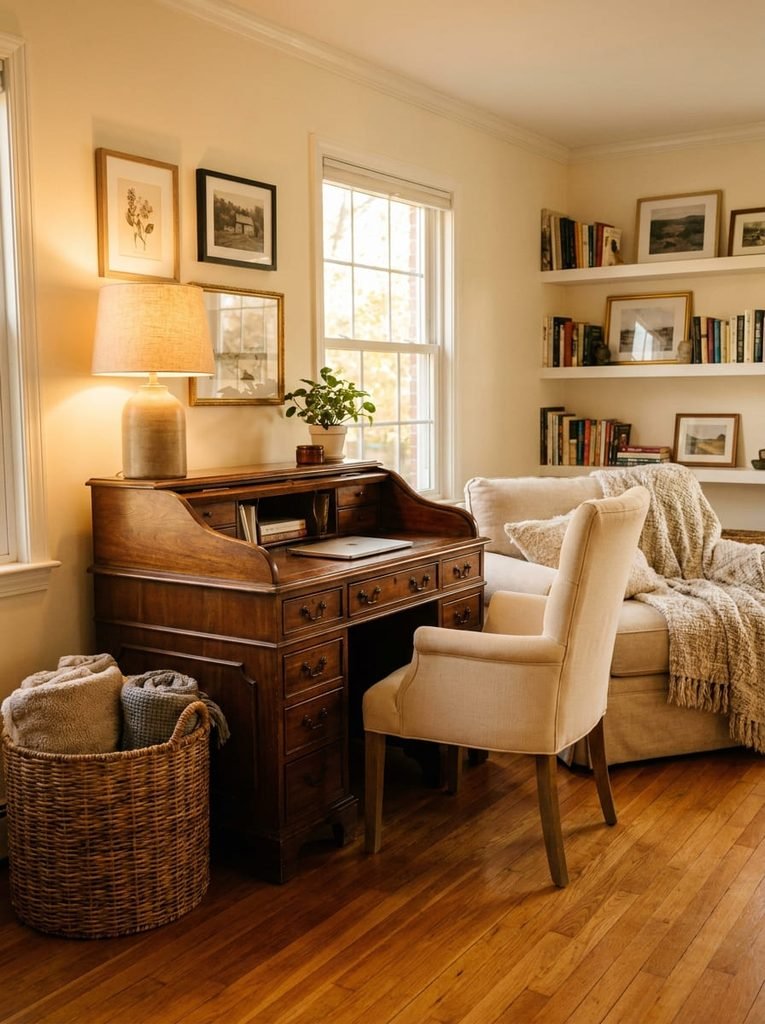
Your living room workspace does not have to look formal or corporate. A cozy design can include a wooden desk, soft upholstered chair, woven basket, table lamp, framed artwork, and a few books. Warm textures help the work area blend naturally with a comfortable living room. This approach is especially appealing if you work from home for several hours each day and want your workspace to feel pleasant rather than sterile.
13. Add a Compact Workspace Beside the TV Unit
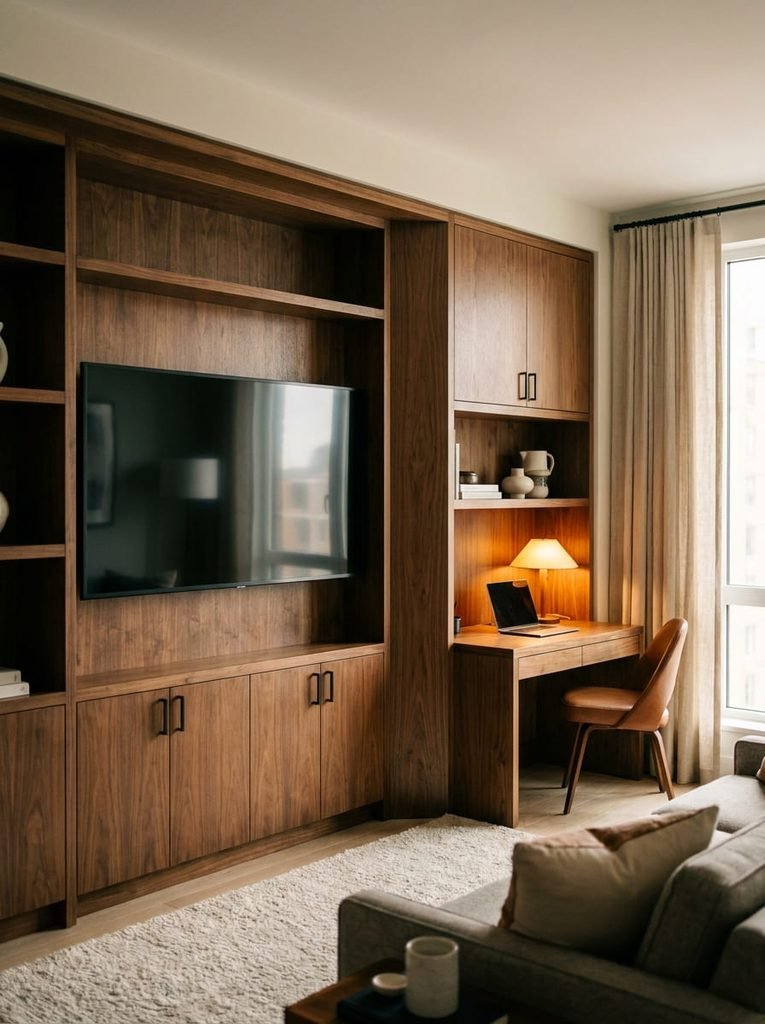
The wall surrounding a television can sometimes provide an opportunity for a built-in workspace. Instead of leaving one side of the media wall empty, extend the cabinetry or shelving to include a small desk. Keeping the materials consistent makes the entire wall appear intentionally designed. This is a particularly useful approach for modern apartments where every section of wall needs to serve a purpose.
14. Use a Secretary Desk for a Flexible Living Room
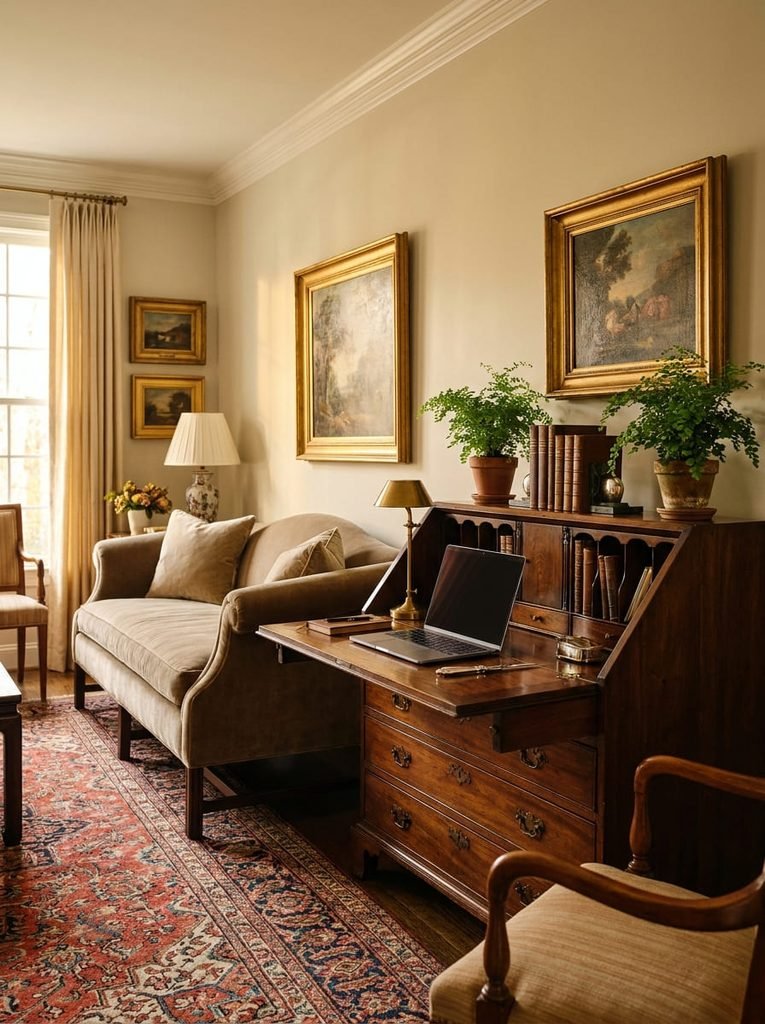
A secretary desk offers a classic solution when you want a workspace that can be closed away. These desks typically have a fold-down surface that provides a temporary working area and can be closed after use. Their furniture-like appearance makes them especially suitable for traditional, transitional, or eclectic living rooms. Add a decorative lamp and a few carefully chosen accessories, and the piece can look just as appropriate as any other living room furniture.
15. Design a Workspace Around the Living Room Style
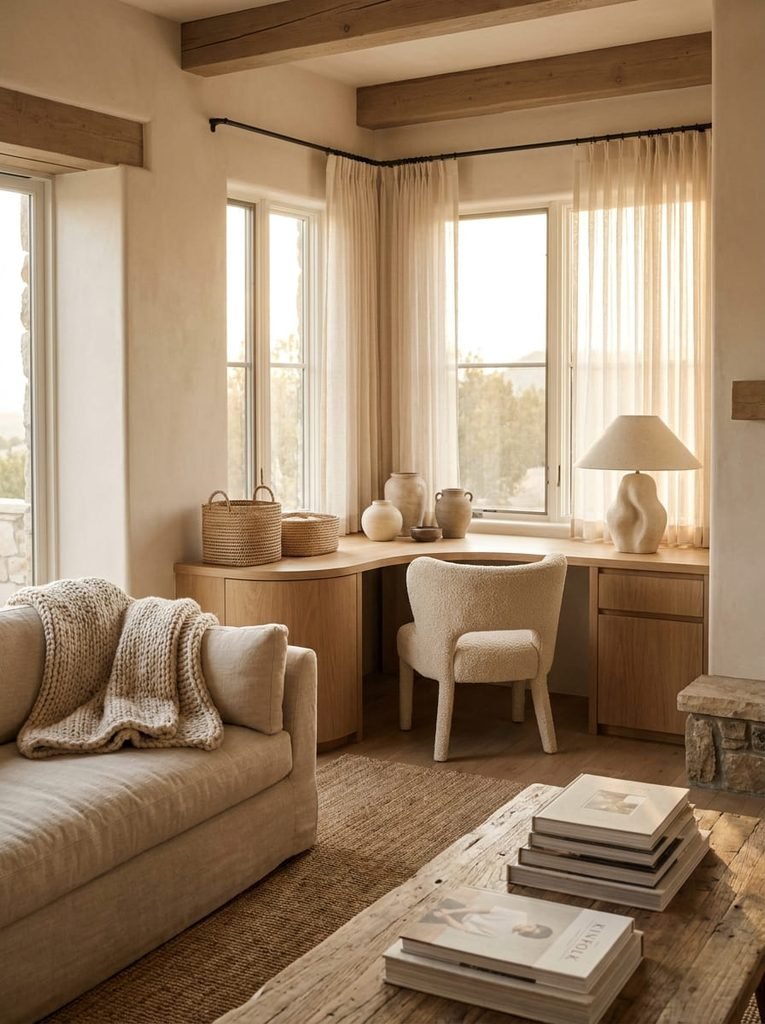
The best work space in living room interior design does not necessarily follow a specific office trend. Instead, it responds to the style of the room itself. A Scandinavian living room might work well with a pale wood desk and simple chair, while a traditional room could use a classic writing desk and upholstered seating. For a modern organic interior, natural wood, textured fabrics, and understated accessories can create a workspace that feels warm and sophisticated.
16. Use Vertical Storage to Save Floor Space
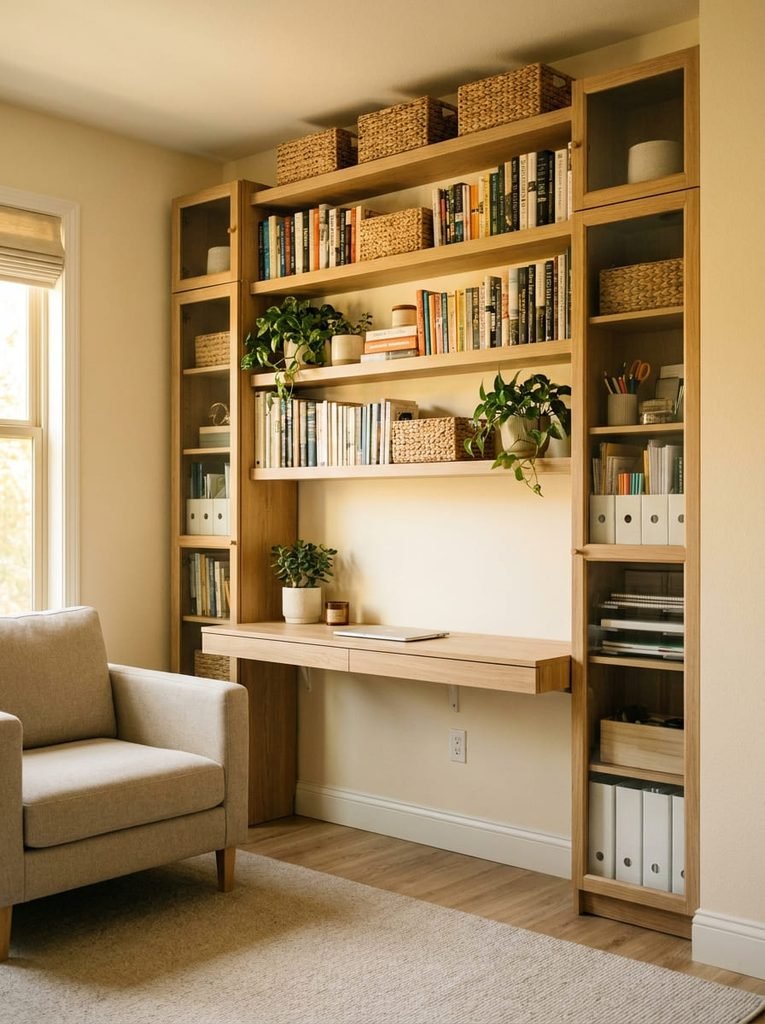
When your living room is small, look upward rather than adding more furniture to the floor. Wall-mounted shelves, pegboards, cabinets, and narrow bookcases can provide useful storage without making the workspace feel cramped. Keep frequently used items within easy reach while placing less attractive supplies inside baskets or closed containers. Vertical organization also gives the workspace a more finished appearance while preserving valuable floor space.
17. Add a Workspace to an Open-Plan Living Room
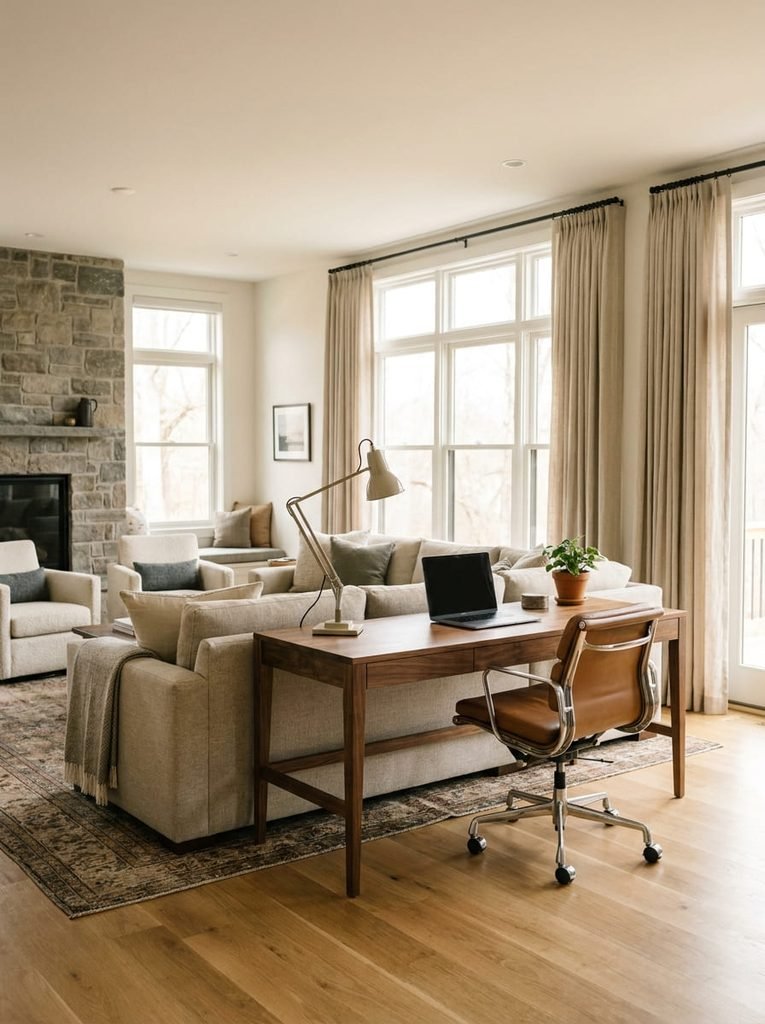
Open-plan homes often require furniture to perform multiple functions, making an integrated workspace especially useful. Position the desk near a wall, behind a sofa, or alongside a bookcase so it has a defined relationship with the living area. A rug, lighting fixture, or change in furniture orientation can subtly distinguish the workspace without constructing a wall. This keeps the overall space open while giving you a clear place to concentrate.
18. Make the Desk Part of the Decor
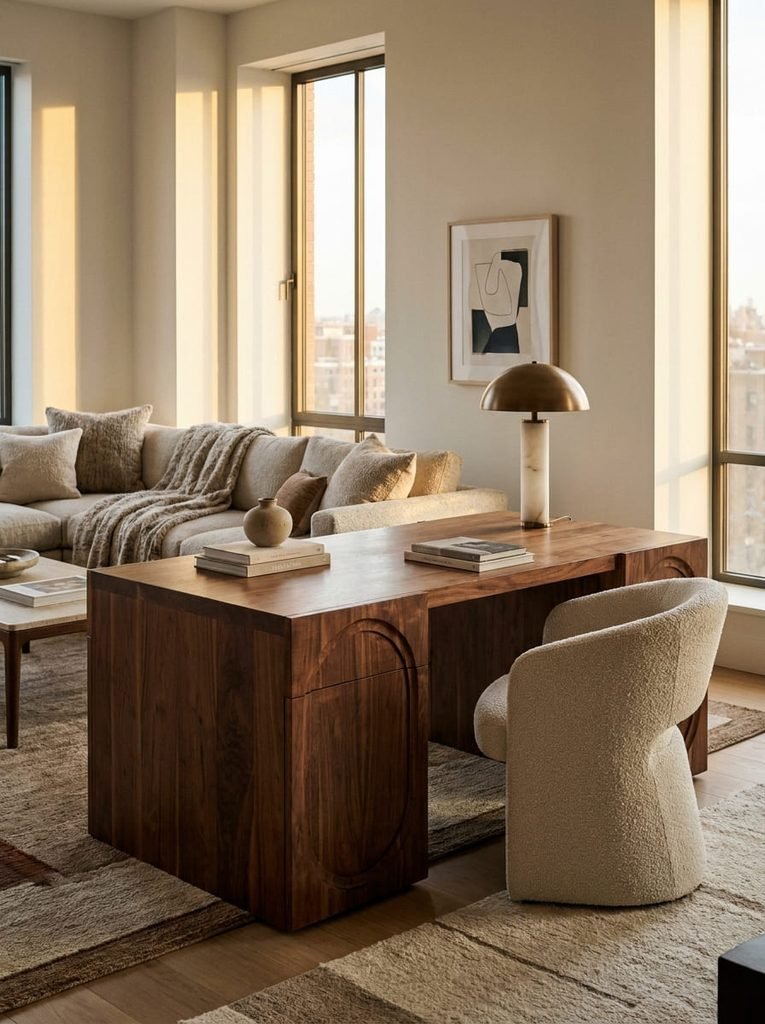
Instead of treating the desk as purely functional furniture, make it one of the attractive elements of the living room. Choose a beautiful wood finish, sculptural chair, elegant lamp, and a small collection of decorative objects. Keep the desk surface organized so it looks appealing even when you are not working. When thoughtfully styled, a workspace can actually enhance the overall interior rather than detract from it.
How to Make a Living Room Workspace Feel Less Like an Office
The easiest way to make a workspace blend into a living room is to avoid excessive office furniture and visual clutter. Choose furniture that shares materials and colors with the surrounding room, then soften the area with artwork, plants, textiles, and warm lighting. Hidden cable management and closed storage can make an especially large difference because wires and paperwork quickly make a living room feel like a workplace. Most importantly, leave enough breathing room around the desk so the workspace feels intentionally integrated rather than squeezed into a leftover corner.
Final Thoughts
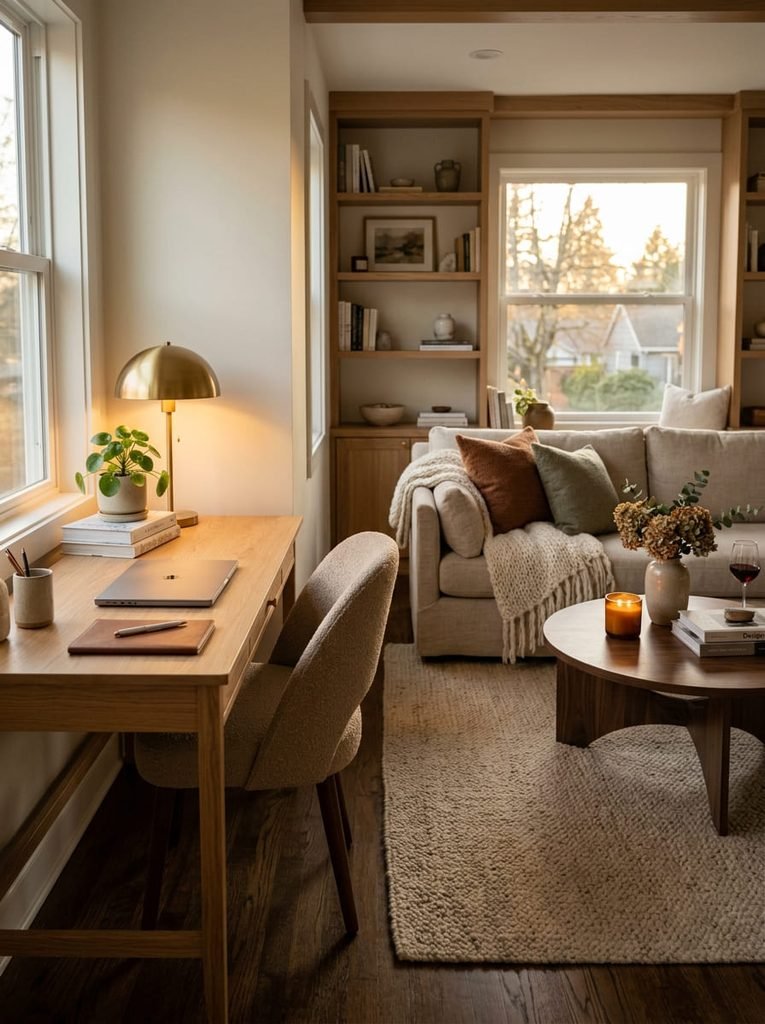
A well-designed work space in living room interior design can give you all the functionality of a home office while preserving the comfort and beauty of your main living area. Whether you have room for a built-in workstation or only enough space for a small floating desk, the most successful designs make the workspace feel connected to the rest of the room. Think about natural light, storage, furniture proportions, and visual cohesion before choosing the desk and accessories. With a thoughtful layout, even a compact living room can become a comfortable place to work without sacrificing its relaxing, welcoming atmosphere.