14 Playful Montessori Bedroom Ideas For Toddler Boys
Some visuals may be AI-generated when helpful.
Toddler toys take over a bedroom faster than you can pick them up. These toddler bedroom boy montessori ideas help you set up a room that is playful, calm, and easy to keep tidy. Each one is made for small hands and real family life.
Pick two or three ideas and start with those.

1. Low Floor Bed

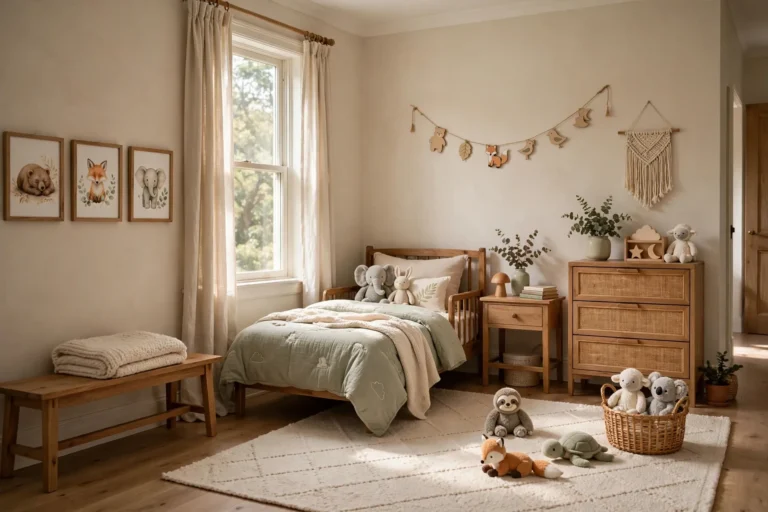
A floor bed sits just a few inches off the ground, so your toddler can climb in and out on his own. This gives him a sense of freedom and helps him learn when he is tired. You can use a simple wood frame or just a mattress on the floor. Make sure the room is safe first, with covered outlets and no heavy items he can pull down. A small rug beside the bed keeps the floor soft and warm for bare feet.
2. Low Open Shelves

Low open shelves let your toddler see his toys and pick what he wants without asking for help. Keep the shelves at his height, with each toy in its own spot so he can tell where things go. Wood shelves or simple cube shelves both work well. Always anchor shelves to the wall so they cannot tip over. Leave some empty space on each shelf, since a calm shelf is easier for a toddler to use than a crowded one.
3. Toy Rotation Basket
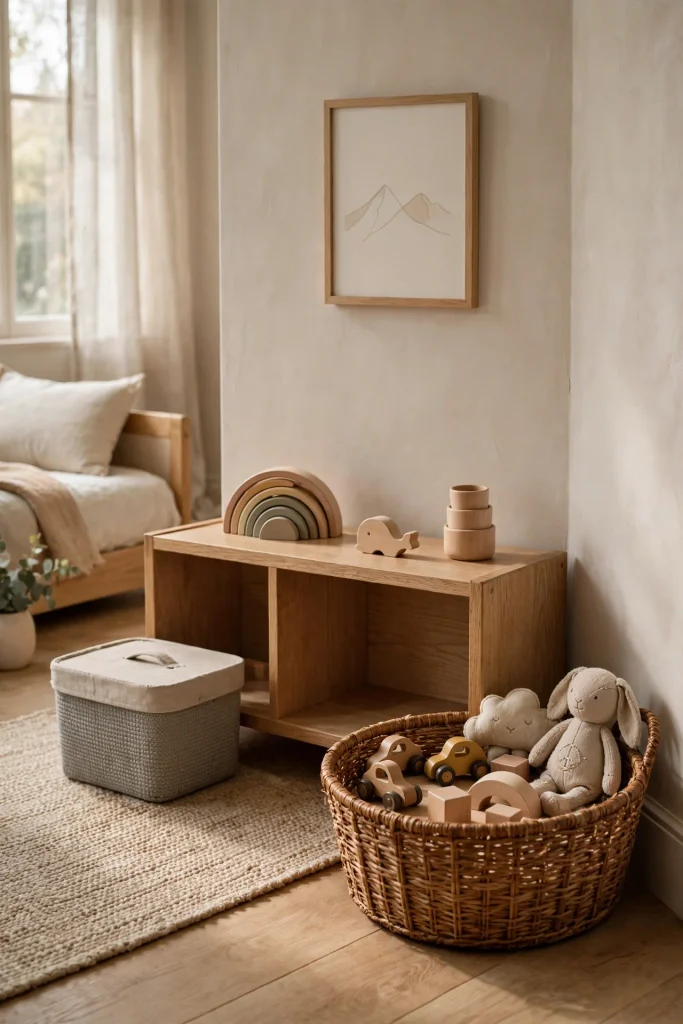
A toddler does not need every toy out at once. Keep about eight to ten toys on the shelf and store the rest in a closed bin or a high closet. Every week or two, swap a few toys for new ones. This keeps old toys feeling fresh and makes cleanup much faster. A large basket in the corner is a great spot for the toys that are waiting for their turn.
4. Child Height Hooks

Hooks placed at your toddler’s height let him hang up his own jacket, bag, and towel. This small change builds habits and saves you from picking things up off the floor. Choose smooth wood or metal hooks with rounded ends for safety. Mount them on the wall near the door so the routine feels natural. A short row of two or three hooks is enough for most small bedrooms.
5. Low Shatterproof Mirror

A mirror at floor level lets your toddler see himself while he plays, moves, and learns to dress. Choose a shatterproof acrylic mirror and fix it firmly to the wall with strong mounting hardware. Place it near the floor bed or beside the play area. Toddlers love watching their own movements, and a mirror also helps them feel proud of small skills like putting on socks. It is a simple piece that makes the room feel bigger too.
6. Small Table And Chair Set
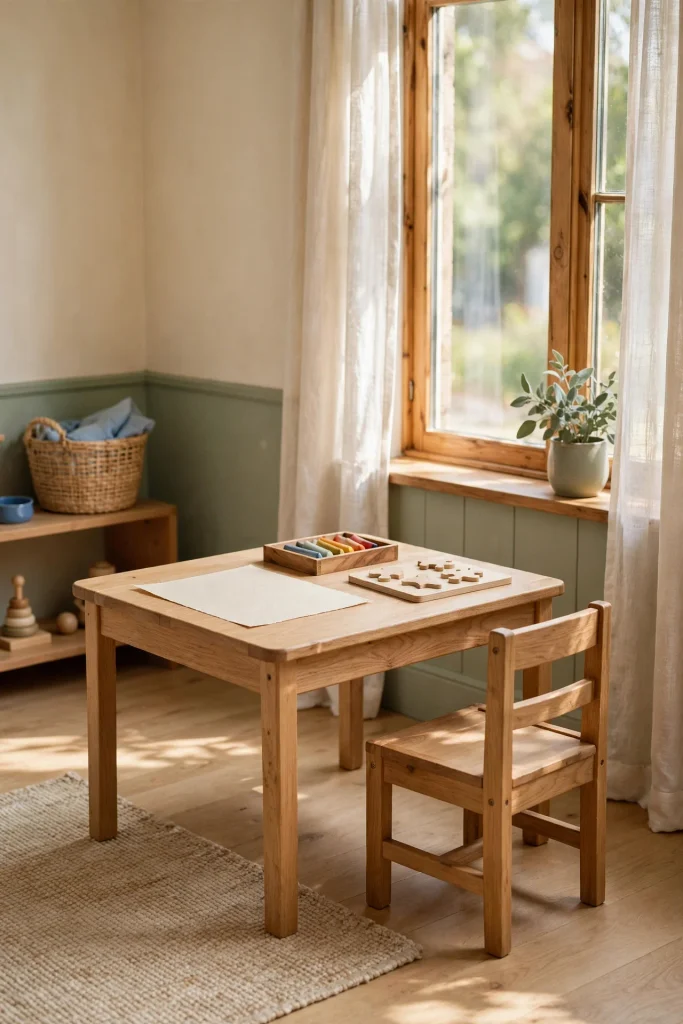
A small table and chair give your toddler his own spot for drawing, puzzles, and snacks. Pick a set where his feet can rest flat on the floor and his arms reach the table easily. Light wood looks calm and matches most bedroom styles. Keep a small tray of crayons and paper on the table so it is always ready for use. This corner turns playtime into a quiet, focused activity.
7. Cozy Reading Nook

A reading nook can be as simple as a floor cushion and a small shelf with the covers of books facing out. When your toddler can see the cover, he is more likely to pick a book and sit down. Place the nook near a window for soft daylight during the day. Add a small basket for the books he is reading this week. This corner gives him a calm place to rest when the rest of the room feels busy.
8. Simple Dresser Setup

A low dresser with one drawer he can open lets your toddler pick his own clothes. Fill that drawer with just three or four outfits so the choice stays easy. Keep the heavy drawers above or locked if the dresser could tip. Use a soft cloth or wood divider to keep socks and shirts from mixing together. This small step builds independence and makes mornings a bit smoother for both of you.
9. Earthy Playful Colors

Soft earthy colors like sage green, warm blue, and sand look calm while still feeling playful. Pair them with natural wood to keep the room warm and simple. You can add one bold color in a small way, such as a bright pillow or a framed print. Avoid too many loud patterns, since a busy room can make it harder for a toddler to settle down. A calm base lets his toys be the colorful part of the room.
10. Playful Wall Art At His Eye Level

Hang a few simple pictures at your toddler’s eye level so the room feels made for him. Animal prints, vehicles, and shapes in soft colors work well for a boy’s room. A wood height chart on the wall is both fun and useful as he grows. Keep the art light and secure so nothing can fall. Changing one picture every few months is an easy way to keep the walls interesting without a full redo.
11. Soft Rug Play Zone

A large soft rug marks a clear spot for play, and it makes the floor comfortable for crawling, building, and rolling cars. Choose a washable rug in a neutral color so spills are not a worry. Place it near the shelves so toys are easy to reach. When the toys are put away, the rug also gives the room a cozy, finished look. A flat weave rug works best since it will not trip little feet.
12. Baskets And Trays For Easy Cleanup

Open baskets and shallow trays make cleanup easy for toddlers because there are no lids to deal with. Use one basket for cars, one for blocks, and one for soft toys so he knows where each toy belongs. Wood trays work well for puzzles and small activities that he can carry to the table. Choose baskets made of cotton rope, wood, or felt. This simple system turns tidy up time into a small game.
13. Soft Lighting For Day And Night

Gentle lighting helps your toddler wind down at night and wake up calmly in the morning. Use a dimmable lamp or a small night light with a warm tone, and keep cords out of reach. Sheer curtains let in daylight while keeping the room soft. A lamp on a high shelf is safer than one on the floor. Good lighting also makes the reading nook and play area feel inviting.
14. Visual Routine Chart

A picture chart on the wall shows your toddler what comes next, such as wake up, get dressed, play, and read. Use simple drawings or photos of him doing each step. Hang it at his eye level near the door or the dresser. Toddlers love knowing what to expect, and a chart can reduce bedtime arguments. Over time he may start pointing to the steps himself, which builds confidence and independence.
Safety Checklist Before You Start
Anchor all shelves and tall furniture to the wall so nothing can tip over. Cover outlets and keep cords out of reach. Check that the room is fully safe before using a floor bed, since your toddler can leave the bed at any time. Avoid small parts, loose cloth, and heavy items that he could pull down. Take a quick look at the room from his height on the floor, because that is the best way to spot anything you may have missed.