Hanukkah Traditions for Kids: 12 Simple Family Activities
Hanukkah is an eight-night Jewish holiday. Families may light a hanukkiah, play dreidel, eat special foods, sing songs, share gifts, and spend time together.
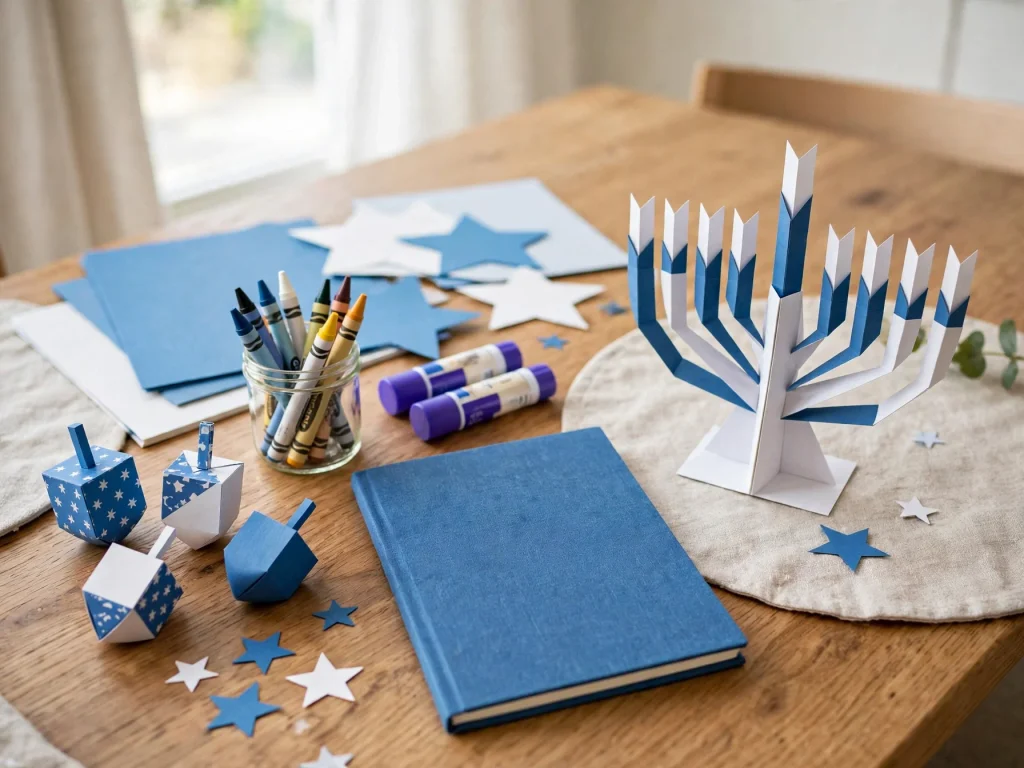
Every family celebrates in its own way. Some families follow many traditions. Others choose only a few meaningful activities.
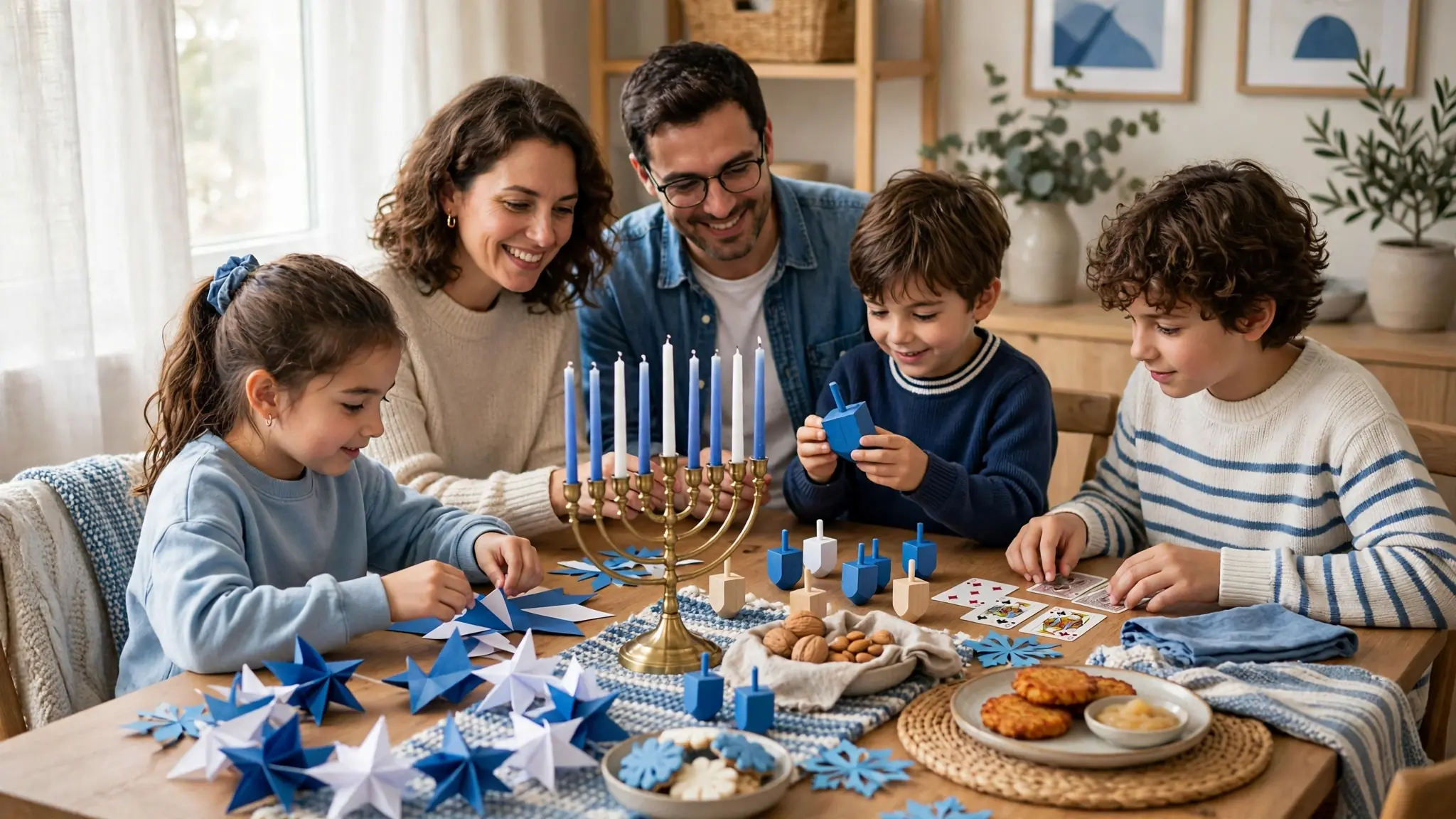
These Hanukkah traditions for kids use simple language and hands-on ideas. Children can help with crafts, songs, food preparation, storytelling, and acts of kindness.
Adults can explain the holiday in a way that fits the family’s own customs. Children do not need to take part in every activity. The most important part is creating a warm and respectful family moment.
1. Light the Hanukkiah Together
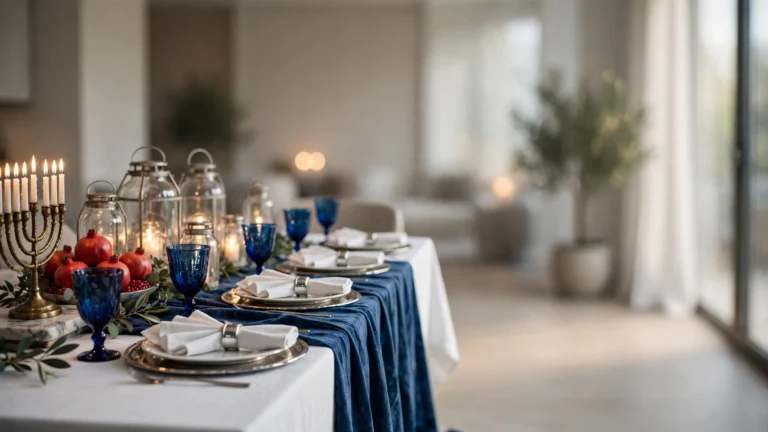
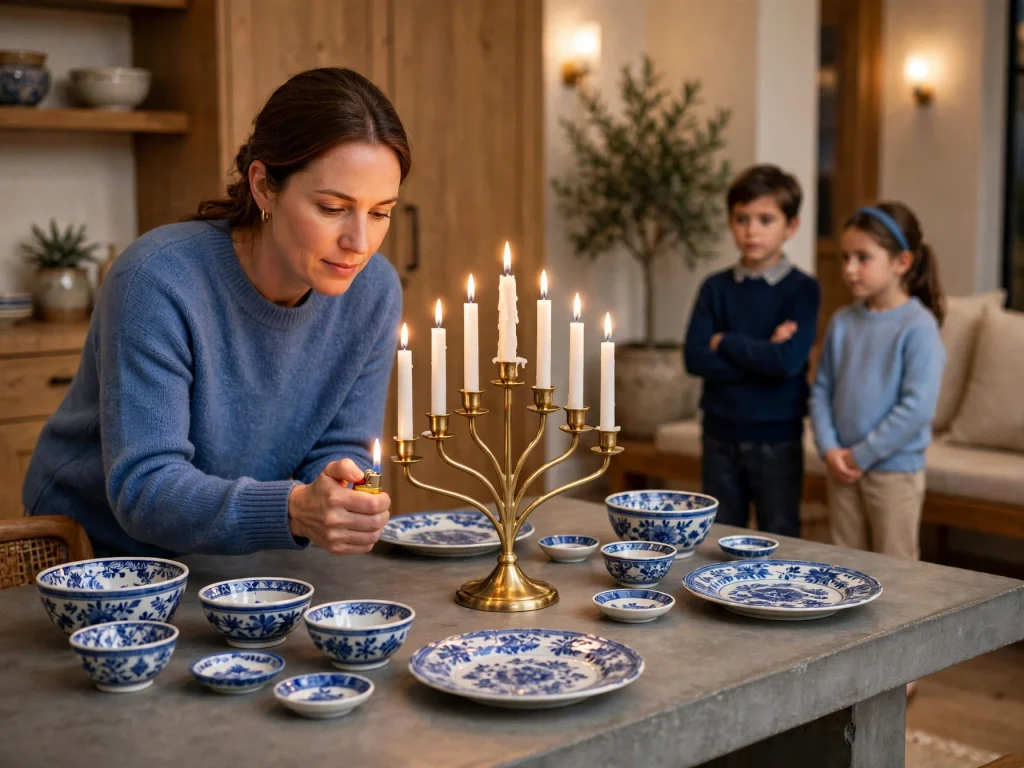
One of the best-known Hanukkah traditions is lighting the hanukkiah. A hanukkiah has nine candle spaces. Eight candles represent the eight nights, and the shamash is used to light the others.
How kids can take part
- Help place the hanukkiah on a stable table.
- Count the candle spaces with an adult.
- Choose a safe place where everyone can see it.
- Watch an adult light the candles.
- Help count the nights of Hanukkah.
- Draw a picture of the hanukkiah afterward.
- Talk about what the light means to your family.
An adult should handle all matches, lighters, and real flames. Keep the hanukkiah away from curtains, paper, toys, table edges, and busy walkways.
Never leave real flames unattended. Follow your family’s customs for the blessings and candle-lighting order.
2. Learn About the Shamash
The shamash is the helper candle. It is used to light the other candles on the hanukkiah.
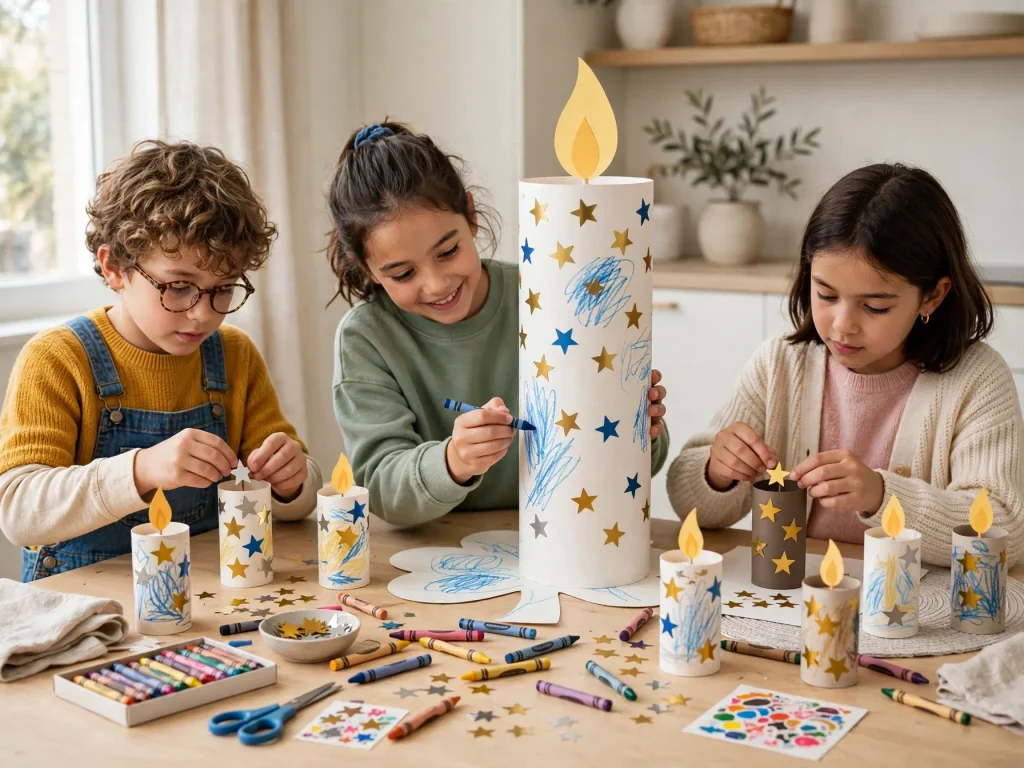
This gives children an easy way to talk about helping others. You can explain that a helper can make it easier for other people to shine.
Simple activity
- Cut one large paper candle and eight smaller paper candles.
- Make the large candle the shamash.
- Let children decorate the candles with stars, lines, or stickers.
- Ask each child to name one way they can help at home.
- Write or draw the kind actions on the paper candles.
- Display the craft near, but not beside, a real flame.
This is a safe craft alternative for young children who should not be near candles.
3. Tell the Hanukkah Story
Children often understand a holiday better when they hear a short story. Use language that matches their age.
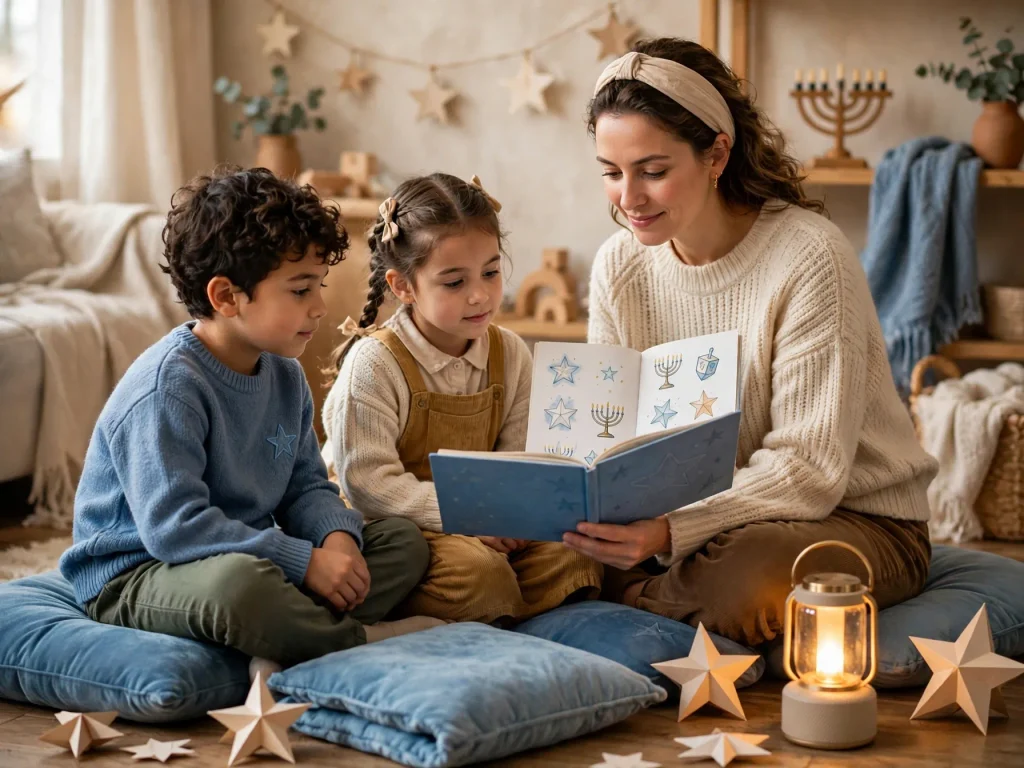
You can talk about the rededication of the Temple in Jerusalem, the small amount of oil that is traditionally said to have lasted for eight days, and the importance of hope and religious freedom in the story.
How to make story time work
- Choose a child-friendly book from a trusted source.
- Keep the first explanation short.
- Use pictures, paper candles, or a simple timeline.
- Ask children what part they remember.
- Let older children ask questions.
- Explain that families may tell and understand parts of the story in different ways.
- Avoid turning the story into a test.
A short story followed by a craft or song can work better than a long explanation for younger children.
4. Play Dreidel
Dreidel is a traditional Hanukkah game. A dreidel is a four-sided spinning top with a Hebrew letter on each side.
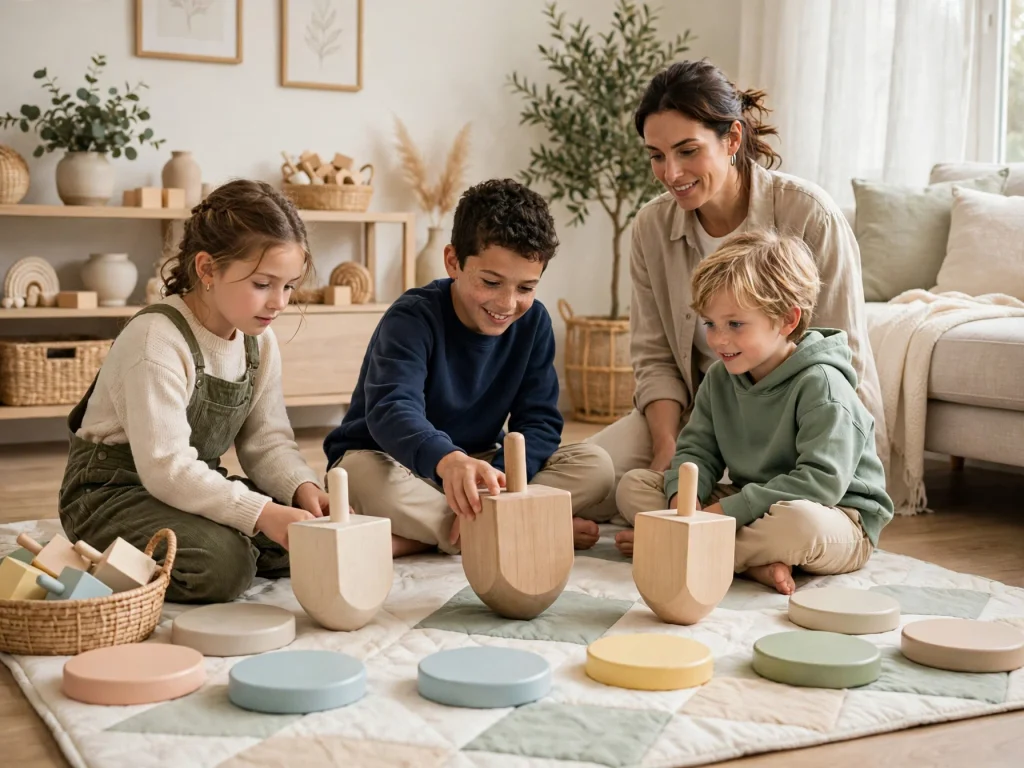
Children can play with chocolate gelt, buttons, large craft counters, or other safe tokens. Use large pieces for young children.
Simple setup
- Give each player the same number of tokens.
- Place one token in the middle.
- Let each child take a turn spinning.
- Follow the rules used by your family or community.
- Add or remove tokens according to the letter shown.
- End the game when the group is ready.
Explain the rules before starting. For toddlers, use a large dreidel and skip small tokens. Small pieces can be choking hazards.
To include children who do not want to compete, let them spin the dreidel, call out the letters, or decorate a score sheet.
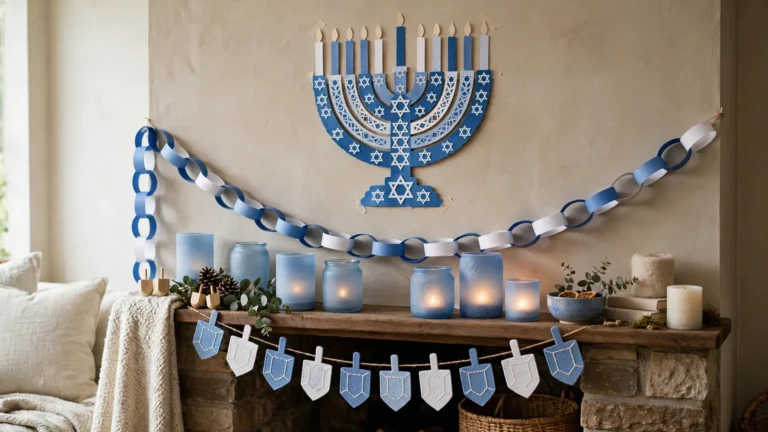
5. Make Paper Dreidels
A paper dreidel is a simple craft that children can make at home or in a classroom.
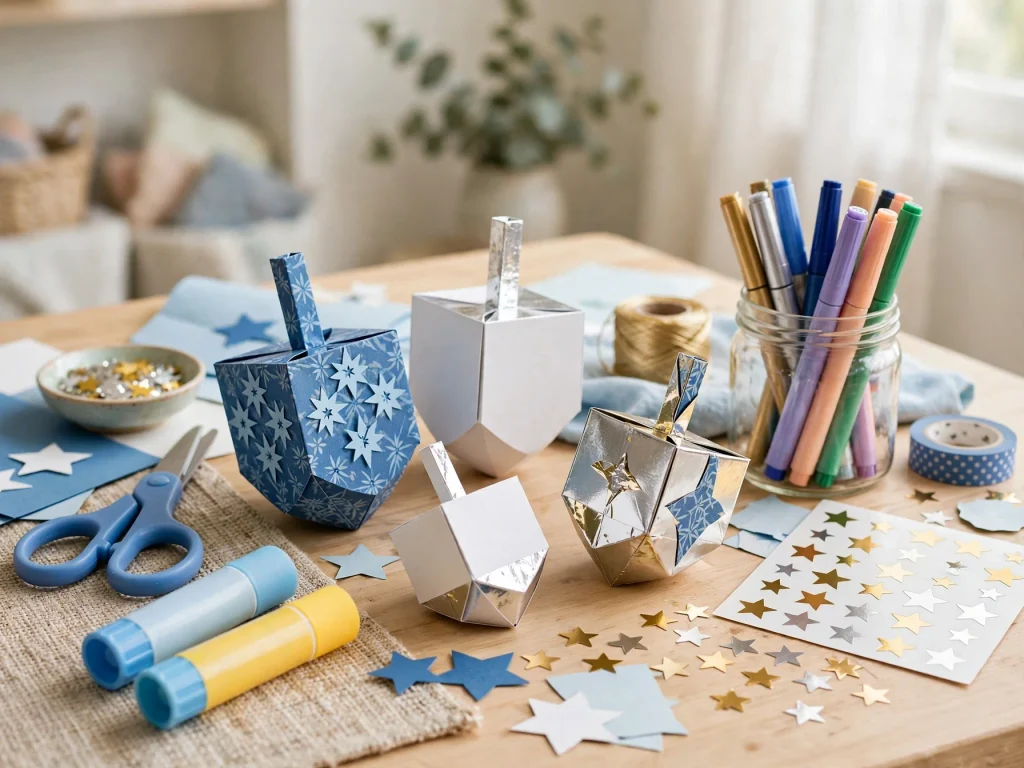
You need
- Blue, white, silver, or gold cardstock
- Child-safe scissors
- Glue sticks
- Crayons or washable markers
- Star stickers
- String, optional
Steps
- Draw or print a simple dreidel shape.
- Let children color the shape.
- Add stars, dots, stripes, or family colors.
- Older children can add Hebrew letters with adult guidance.
- Cut out the shape.
- Fold or glue it into a flat decoration.
- Hang several paper dreidels as a garland.
Adults should cut thick paper for toddlers. Keep scissors and small stickers supervised.
6. Eat Hanukkah Foods
Many Hanukkah foods are cooked in oil. The oil connects with the traditional story of the small amount of oil that lasted for eight days.
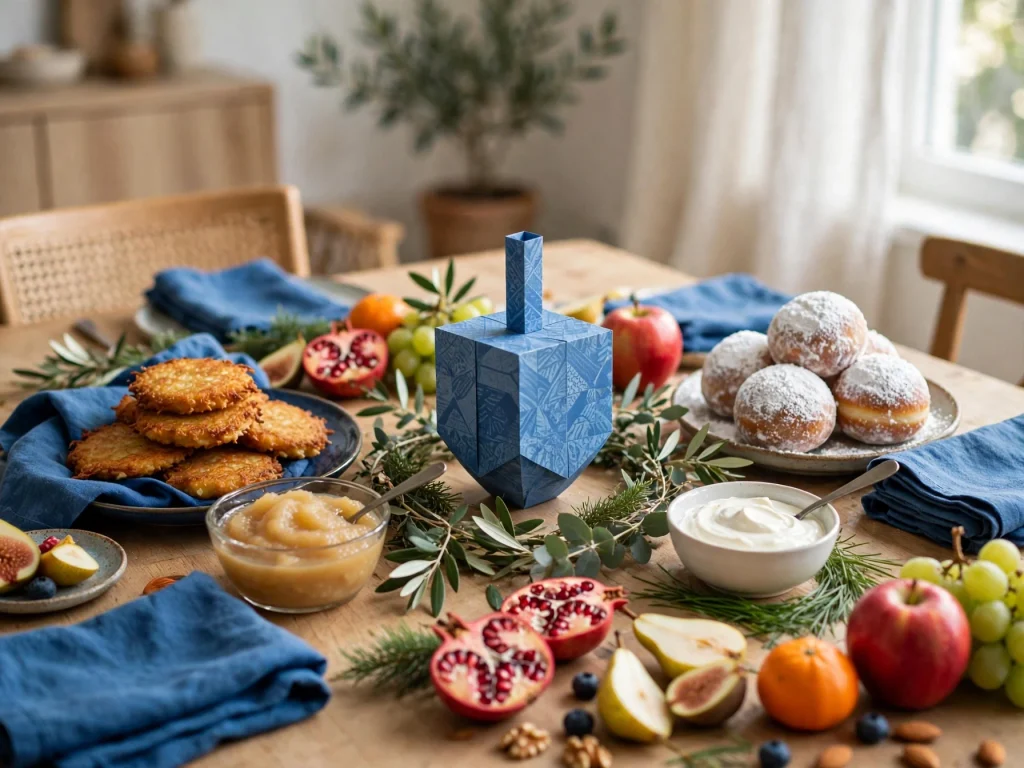
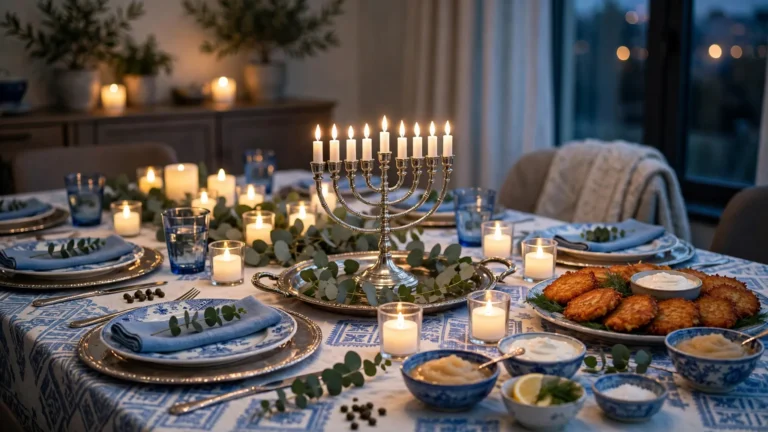
Families may enjoy foods such as latkes, sufganiyot, or other family favorites. Recipes and food customs can vary by family and culture.
Kid-friendly ways to help
- Wash potatoes with an adult.
- Tear herbs into small pieces.
- Stir applesauce or sour cream.
- Add powdered sugar to prepared doughnuts.
- Arrange fruit on a serving plate.
- Fold napkins for the table.
- Help place allergy labels beside the food.
Adults should handle hot oil, stovetops, knives, and ovens. Keep children away from splattering oil and hot pans.
Ask about allergies before serving food. Use separate utensils when preparing food for a child with a serious allergy.
7. Sing Hanukkah Songs
Songs can help children remember the holiday and feel part of the family celebration.
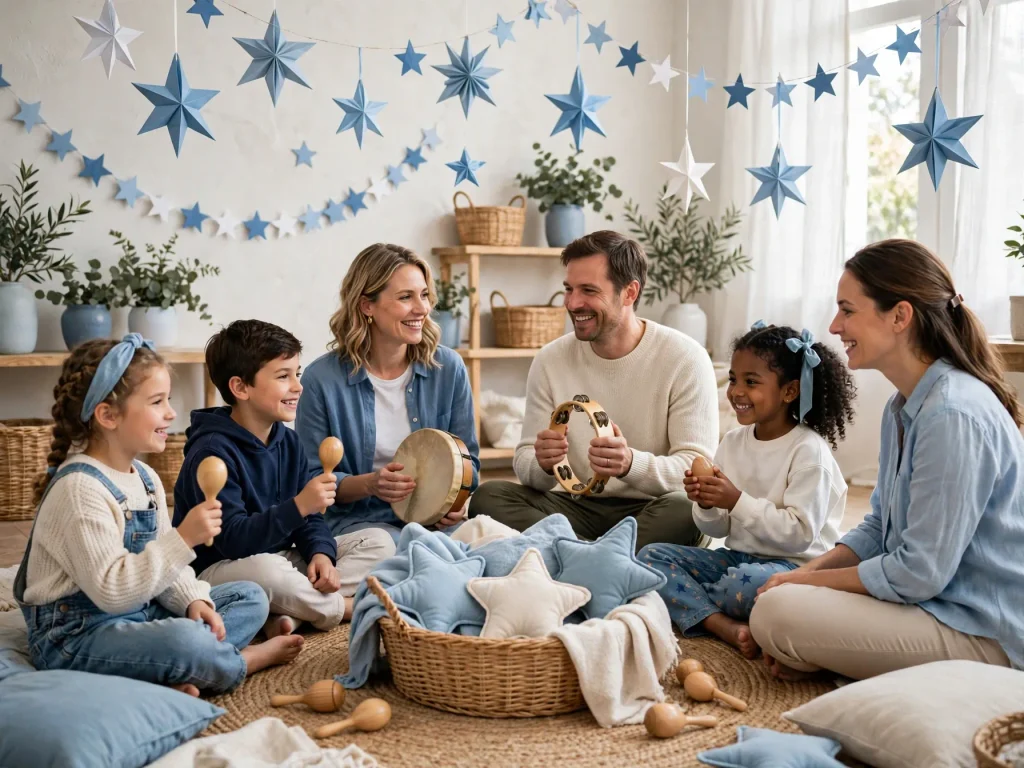
Choose songs that your family knows and enjoys. Some families sing after lighting the hanukkiah, during dinner, or while playing games.
Make a simple song moment
- Sit together in a comfortable area.
- Give children simple rhythm instruments if they are safe.
- Sing one familiar song slowly.
- Let children clap or tap along.
- Ask older children to lead a verse.
- Keep the volume comfortable for everyone.
- End with a calm song or a short family wish.
Do not pressure children to sing alone. Listening, clapping, humming, or sitting quietly are all valid ways to participate.
8. Give Gelt
Gelt means money in Yiddish. Chocolate gelt is often used as a child-friendly gift during Hanukkah.
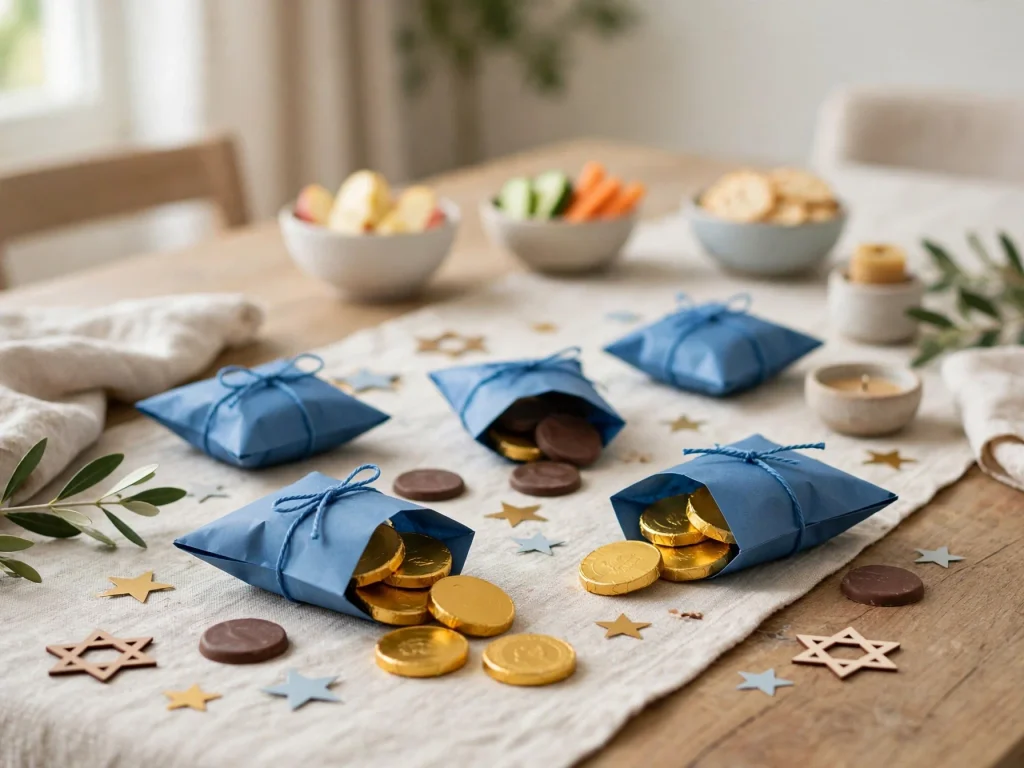
Some families give actual coins, chocolate coins, books, toys, or other gifts. Gifts are a family choice and are not required for everyone.
Safe and thoughtful ideas
- Give one chocolate coin after a game.
- Place gelt in a small paper pouch.
- Let children decorate their own gelt envelope.
- Give a coin to a charity collection.
- Use large tokens instead of chocolate for toddlers.
- Ask about allergies before serving chocolate.
- Keep money and candy away from very young children.
Check chocolate labels for dairy, nuts, soy, and other allergens. Keep small coins away from children who may put objects in their mouths.
9. Create an Eight-Night Countdown
An eight-night countdown helps children understand that Hanukkah lasts more than one day.
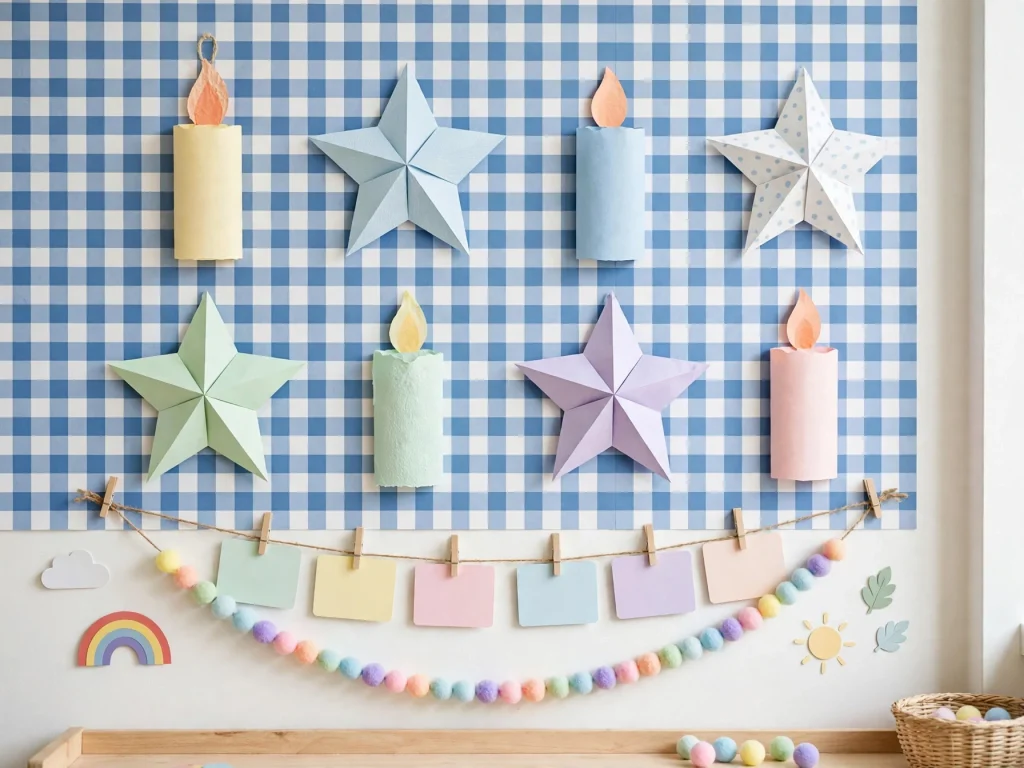
You need
- Eight paper candles or stars
- Blue or white background paper
- Removable tape
- Washable markers
- Eight small activity cards
How to make it
- Draw or cut out eight paper candles.
- Number them from one to eight.
- Add one family activity to each candle.
- Remove or turn over one candle each night.
- Let a child choose the activity for that evening.
- Keep the display away from real flames.
Possible activity cards include:
- Light the hanukkiah with an adult.
- Play dreidel.
- Read a story.
- Make a card.
- Sing a song.
- Share a family food.
- Do a kind action.
- Talk about a family memory.
The countdown does not need to be complicated. A paper display on the refrigerator can work well.
10. Do a Kindness or Tzedakah Project
Hanukkah can be a time to talk with children about kindness, generosity, and helping others. Tzedakah is often connected with giving and justice.
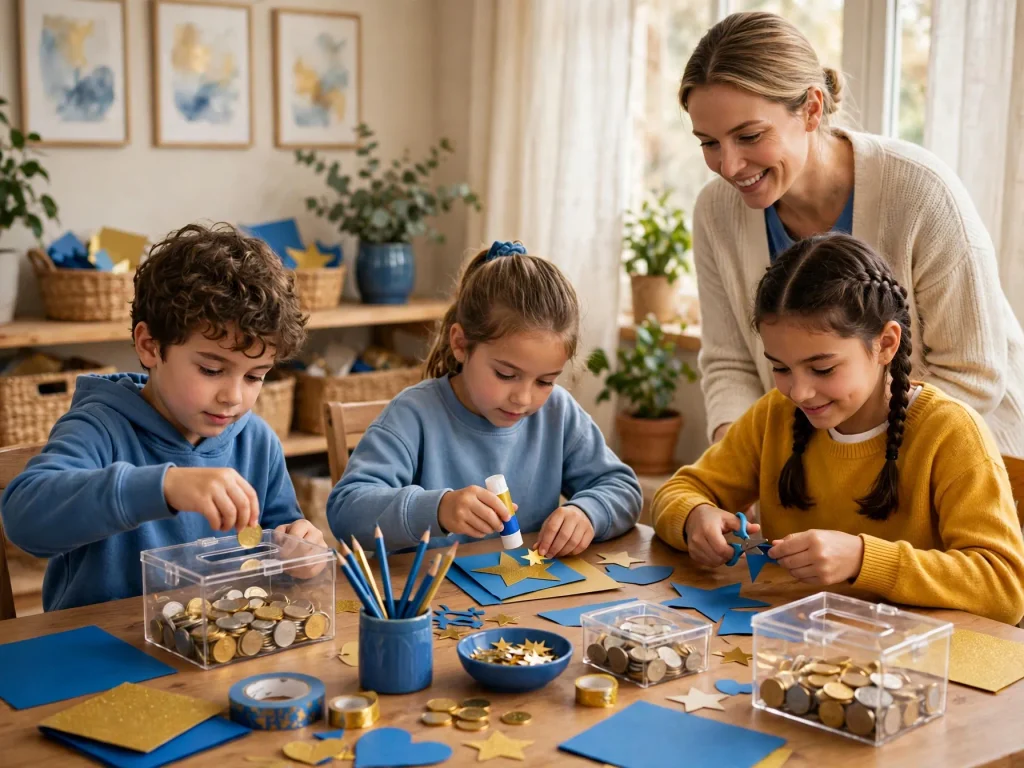
Choose a project that fits the child’s age. It can be small and still be meaningful.
Ideas for children
- Put a coin in a family charity box.
- Draw cards for residents of a care home.
- Donate gently used books.
- Help pack a food pantry box.
- Write thank-you notes.
- Collect warm socks or toiletries.
- Help a neighbor with a simple task.
- Choose one kind action for each night.
Ask a trusted adult or organization what donations are needed. Do not photograph or share another person’s private situation without permission.
11. Make a Family Hanukkah Memory Book
A memory book gives children a place to record family traditions. It can be used again each year.
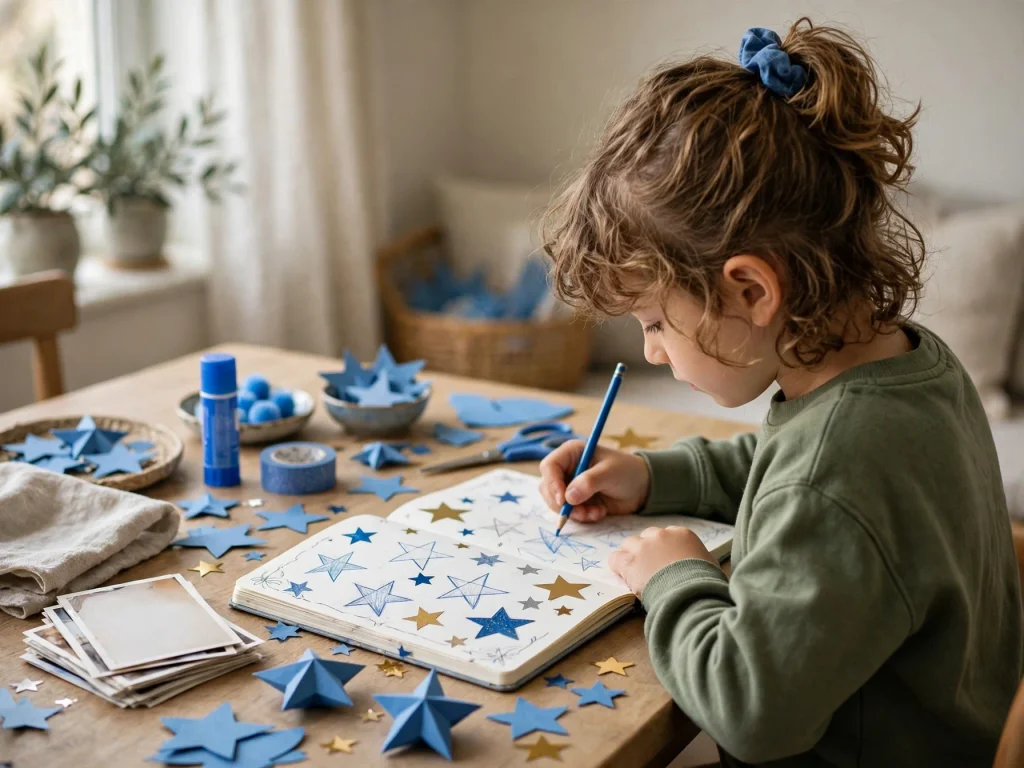
You need
- A blank notebook or scrapbook
- Blue and white paper
- Glue sticks
- Washable markers
- Printed family photos, optional
- Stickers
- Envelopes for small keepsakes
Page ideas
- “Our favorite Hanukkah food”
- “The song we sang”
- “A kind thing we did”
- “My favorite game”
- “What I learned”
- “A family tradition”
- “A drawing of the hanukkiah”
- “A wish for next year”
Let children draw if they are not ready to write. Avoid adding private addresses, phone numbers, or other personal information.
12. Make Hanukkah Cards
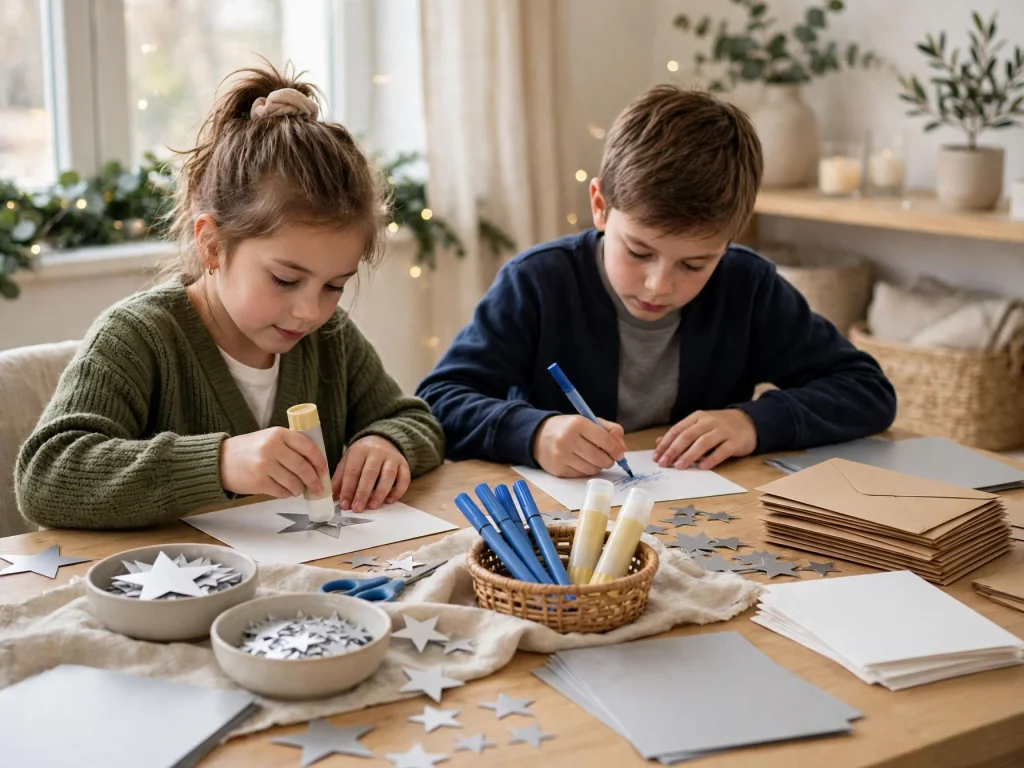
Children can make cards for family members, friends, teachers, or neighbors. A handmade card can be a quiet activity after dinner.
You need
- Blank cards
- Blue and white paper
- Gold or silver cardstock
- Star stickers
- Glue sticks
- Washable markers
- Envelopes
Steps
- Give each child one blank card.
- Add paper stars, dreidels, candles, or simple patterns.
- Let children write or dictate a kind message.
- Add the recipient’s name with adult help.
- Let the glue dry before placing the cards in envelopes.
- Deliver or mail the cards with an adult.
Children do not need to write a religious message. A drawing, thank-you note, or kind wish is enough.
A Simple Eight-Night Family Plan
You can choose one small activity for each night:
Night 1
Light the hanukkiah with an adult and talk about the eight nights.
Night 2
Play a short dreidel game.
Night 3
Make paper dreidels or stars.
Night 4
Eat a family Hanukkah food and talk about its story.
Night 5
Sing a song or read a Hanukkah book.
Night 6
Complete a kindness or tzedakah activity.
Night 7
Make cards for family or friends.
Night 8
Create a memory-book page and look back at the week.
This plan is only a suggestion. Families can change the order or repeat a favorite activity.
Age Guidance for Hanukkah Activities
Toddlers and preschoolers
Use large paper shapes, songs, picture books, stickers, and supervised food preparation. Avoid small dreidels, coins, beads, and chocolate pieces.
Ages 5 to 7
Try simple dreidel games, card-making, large paper crafts, storytelling, and a short kindness project.
Ages 8 to 11
Children can help make decorations, read part of a story, lead a game, write cards, and help prepare a simple food item.
Tweens
Invite them to plan an activity, explain dreidel rules, help younger children, create a memory book, or research a family tradition with an adult.
Respectful Ways to Explain Hanukkah
- Say that Jewish families celebrate Hanukkah in different ways.
- Use the words and pronunciation preferred by your family or community.
- Explain that gifts are common in some families but are not required.
- Use “hanukkiah” when referring to the nine-branched candle holder, while noting that many people also use the word “menorah.”
- Do not treat one food, song, or custom as universal.
- Let children ask questions without making fun of their wording.
- Avoid asking a child to speak for all Jewish people.
- For school events, follow the school’s religious and cultural guidelines.
- Keep participation welcoming and never force a child to pray, sing, eat, or speak.
Safety Notes for Families
Adults should light real candles and supervise the hanukkiah throughout the lighting. Keep it on a stable, heat-safe surface.
Never place paper, ribbon, curtains, toys, or craft supplies near an open flame. Battery-powered LED candles are safer for craft displays.
Adults should handle hot oil, ovens, stovetops, sharp knives, and hot pans.
Check food labels for dairy, eggs, wheat, soy, peanuts, and tree nuts. Use separate utensils for guests with serious allergies.
Keep coins, chocolate gelt, beads, and small craft pieces away from toddlers.
Keep decorations away from exits, stairs, heaters, outlets, and walkways.
Ask for parent permission before photographing children. Follow school, camp, synagogue, and community privacy rules.
Make-Ahead Planning Guide
One week before
- Ask family members about preferred traditions.
- Check for food allergies.
- Choose age-appropriate activities.
- Gather craft supplies.
- Select books and songs.
- Decide who will handle candle lighting.
Two or three days before
- Cut paper dreidels and stars.
- Prepare the countdown display.
- Make activity cards.
- Check the hanukkiah and candles.
- Buy or prepare foods.
- Set aside a notebook for the memory book.
Each evening
- Clear the candle-lighting area.
- Set up only the activity needed that night.
- Keep hot food and candles away from children.
- Take a few quiet minutes to talk together.
- Store small game pieces safely after use.
Frequently Asked Questions
What are the main Hanukkah traditions for kids?
Common traditions include lighting the hanukkiah, playing dreidel, eating foods cooked in oil, singing songs, giving gelt, making crafts, and doing kind actions.
Do children have to receive gifts during Hanukkah?
No. Gifts are a family choice. Some families give presents, while others focus on gelt, books, food, games, charity, or time together.
What is the difference between a menorah and a hanukkiah?
A hanukkiah has nine candle spaces: eight for the nights of Hanukkah and one for the shamash. “Menorah” is also commonly used in everyday speech, but families may prefer different terms.
Can young children light the hanukkiah?
An adult should handle matches, lighters, and real flames. Young children can help set up a safe area, count candles, sing, or watch from a safe distance.
What is a safe dreidel game for toddlers?
Use a large dreidel and skip small tokens. Toddlers can spin the dreidel, clap, name colors, or play with a large paper version under supervision.
What foods do children eat during Hanukkah?
Foods vary by family. Latkes and sufganiyot are well-known examples, but families may also serve other traditional or favorite foods.
How can I explain Hanukkah to a child?
Use a short, age-appropriate story about the holiday, the eight nights, the lights, and your family’s traditions. Let the child ask questions and keep the explanation simple.
How can schools discuss Hanukkah respectfully?
Schools should follow their own policies, consult families or community experts, and avoid requiring religious participation. Cultural learning can include books, history, music, or optional crafts.
Final Thoughts
Hanukkah traditions for kids do not need to be complicated. A candle-lighting moment with an adult, a short dreidel game, a handmade card, or one kind action can become a lasting family memory.
Choose the traditions that fit your family’s customs, your children’s ages, and your available time. Keep real flames, hot food, and small objects supervised.
The best celebration gives children a chance to learn, help, create, and spend meaningful time with the people they love.
Note: These holiday images were created with AI, so real hanukkiahs, crafts, food, and family spaces may look different.