Walnut Interior Design Living Room Ideas
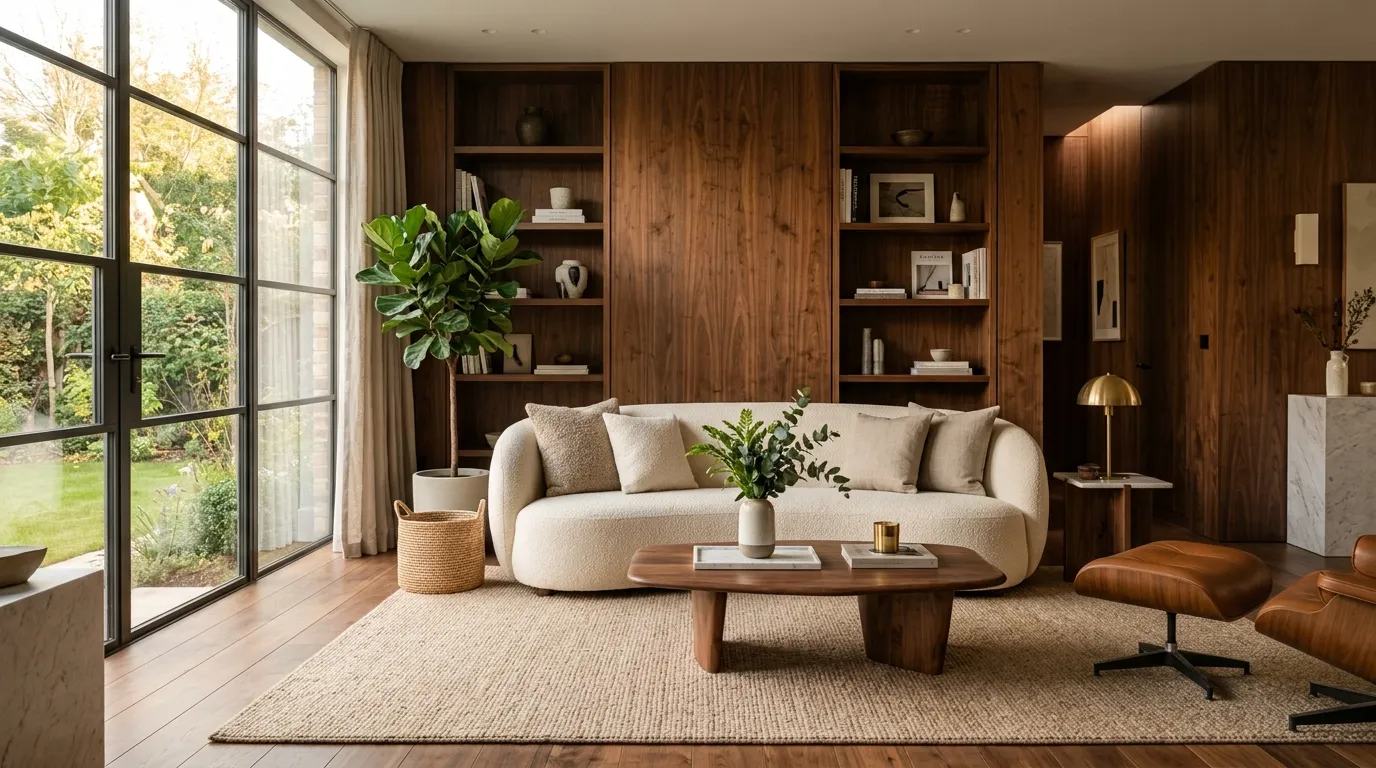
A walnut interior design living room can bring warmth, depth, and timeless character to a home without making the space feel overly traditional. The rich brown tones of walnut wood work beautifully with modern furniture, neutral fabrics, natural stone, soft lighting, and contemporary architectural details. Whether you want a dramatic walnut accent wall or simply a few walnut furniture pieces, this wood can make a living room feel polished and inviting. These walnut interior design living room ideas show different ways to use this beautiful material while keeping the overall space stylish and comfortable.
Why Walnut Works So Well in Living Room Design
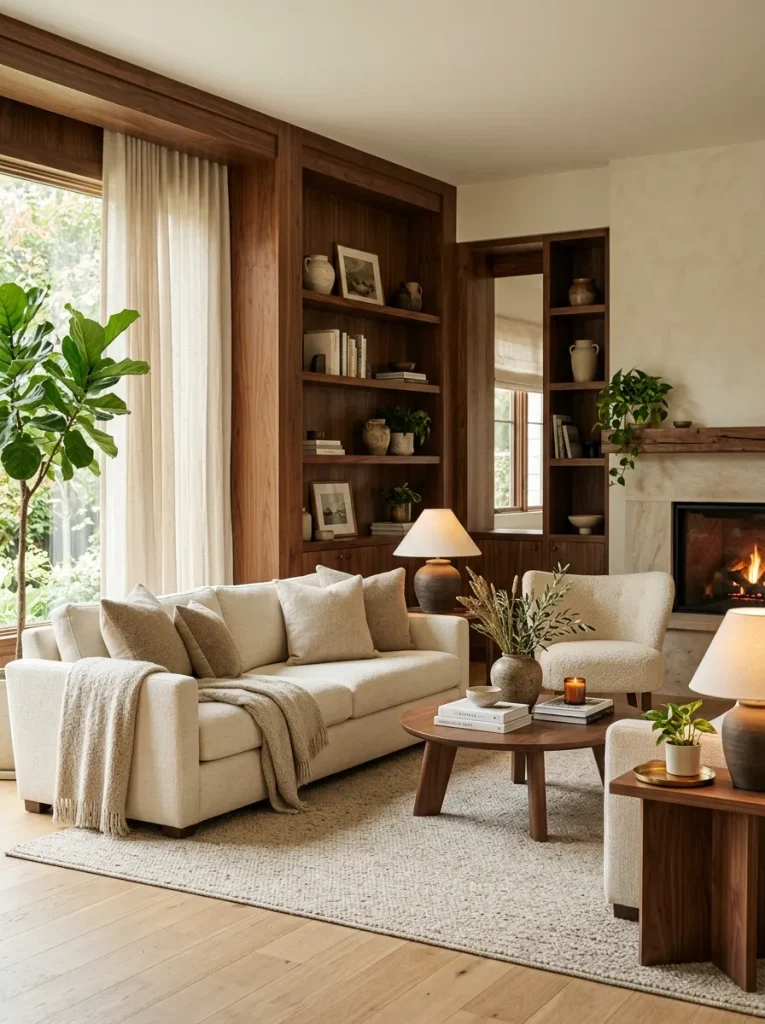
Walnut is especially appealing because it has a naturally rich appearance that can add visual warmth to both modern and classic interiors. Its deep brown tones can make large rooms feel more grounded while also adding sophistication to smaller spaces when used thoughtfully. Walnut pairs particularly well with cream, beige, ivory, warm gray, black, brass, and natural stone. Instead of treating walnut as only a furniture material, you can use it throughout the room as part of the walls, cabinetry, shelving, flooring, or decorative details.
1. Modern Walnut Accent Wall
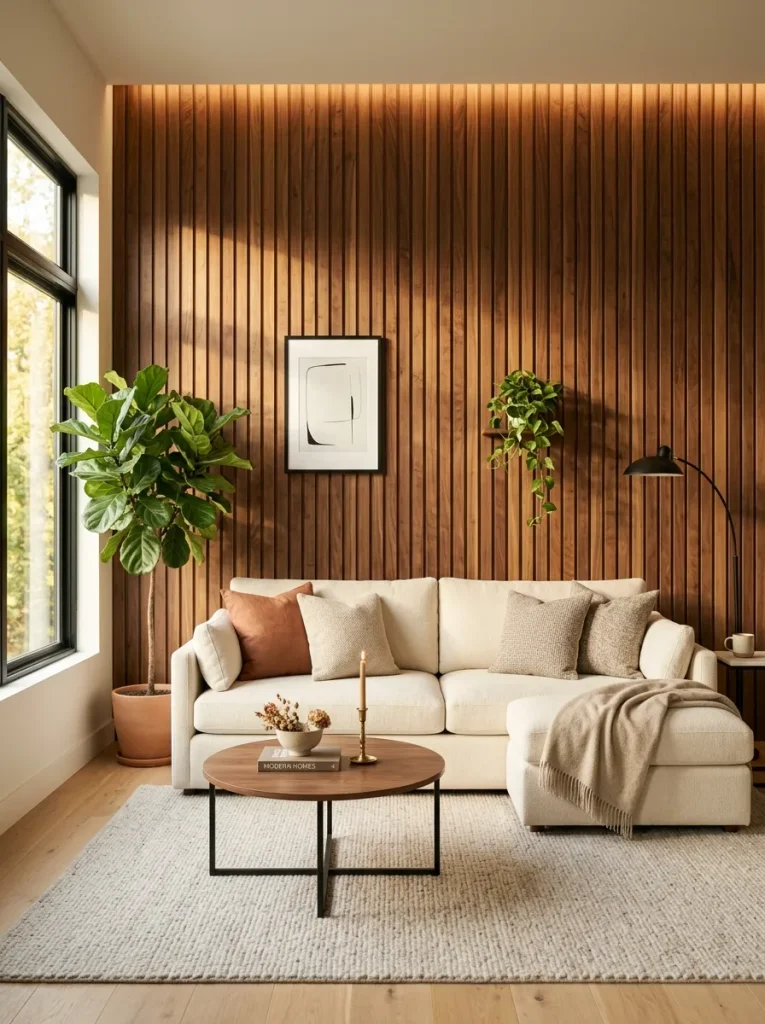
A walnut accent wall can become the main architectural feature of a living room. Vertical walnut slats, large wood panels, or a combination of both can create a sophisticated backdrop behind the sofa or television. Keep the rest of the room relatively light with cream upholstery, neutral rugs, and simple accessories so the walnut remains visually important. Soft lighting directed toward the wood can highlight its natural grain and make the entire room feel warmer in the evening.
2. Walnut Media Wall With Built-In Storage
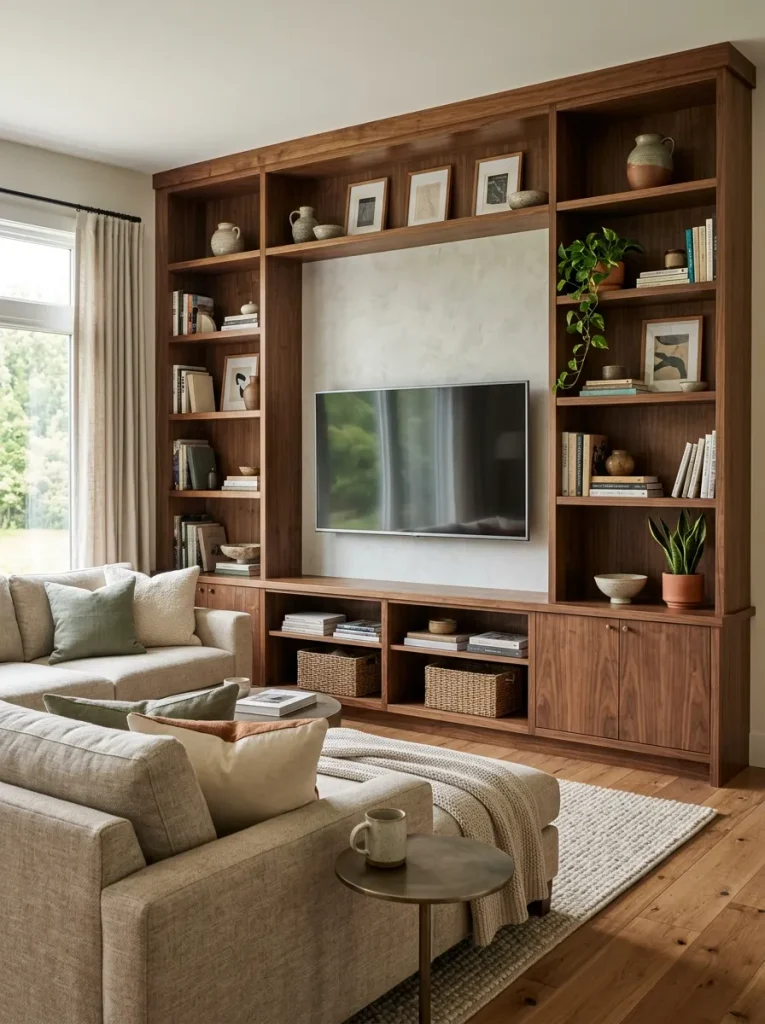
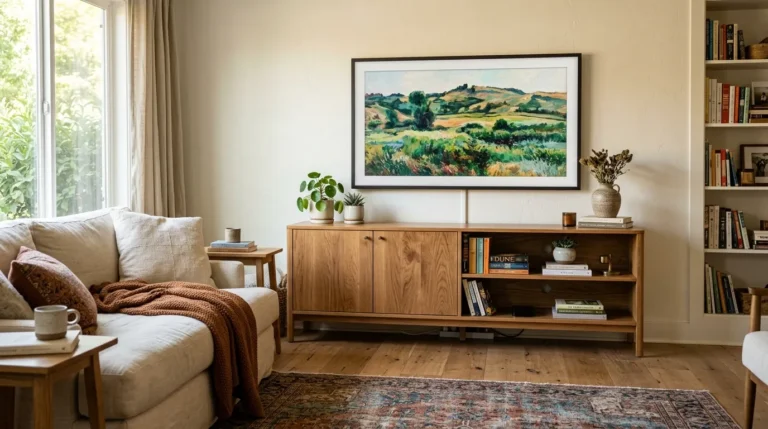
A built-in walnut media wall is a practical way to combine storage and style. Use walnut cabinetry around the television and incorporate open shelving for books, ceramics, artwork, or small plants. A large neutral sofa positioned opposite the media wall can balance the deeper wood tones. For a contemporary appearance, combine walnut cabinetry with a stone, plaster, or subtly textured panel behind the television.
3. Walnut Furniture With Cream Upholstery
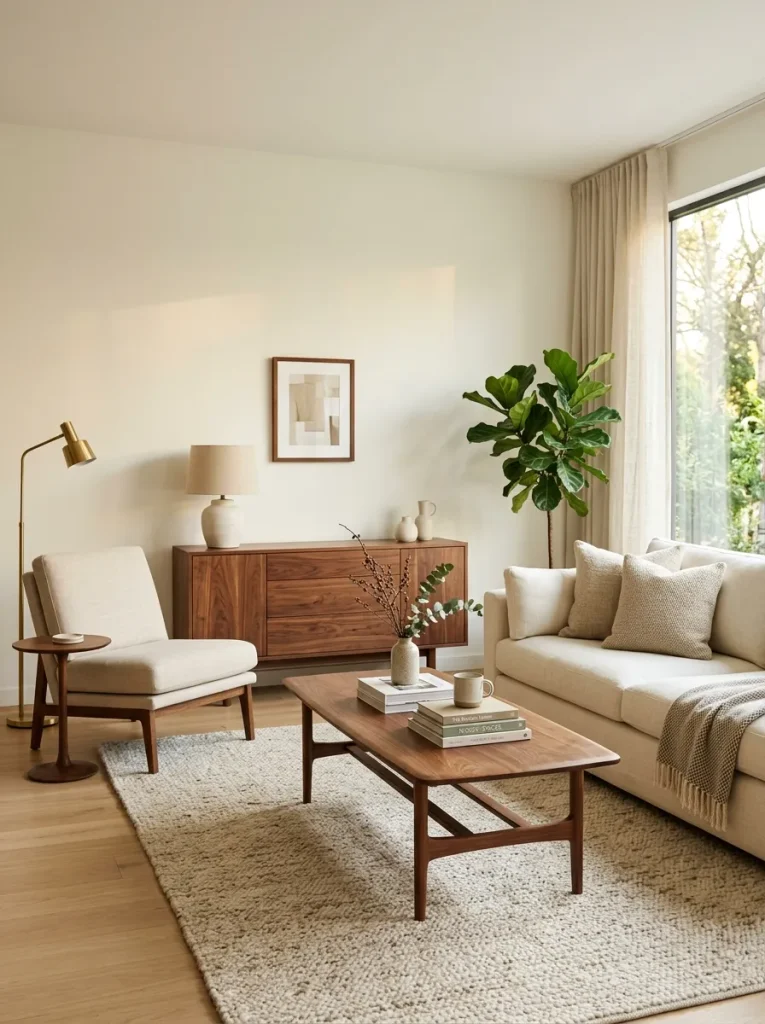
You do not need to cover an entire living room in walnut to achieve the look. A walnut coffee table, sideboard, console, or pair of occasional chairs can provide enough warmth when combined with soft cream upholstery. This combination works especially well in modern and transitional interiors because the light fabric prevents the darker wood from making the room feel heavy. Add a textured area rug and a few neutral cushions to create a comfortable layered appearance.
4. Floor-to-Ceiling Walnut Shelving
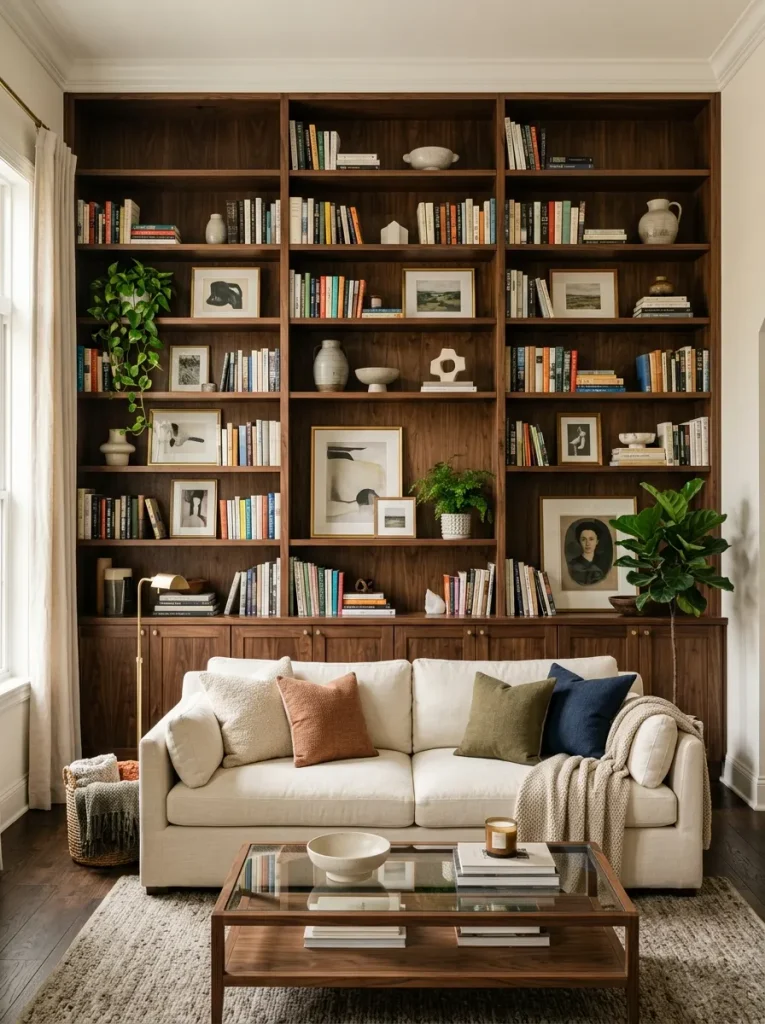
Floor-to-ceiling shelving can make walnut a major part of the living room while providing valuable storage and display space. Use open shelves to display books, artwork, sculptural objects, and greenery rather than filling every section. Closed lower cabinets can hide everyday items and maintain a clean appearance. A large neutral sofa in front of the shelving creates a comfortable contrast with the rich wood background.
5. Walnut and White Living Room
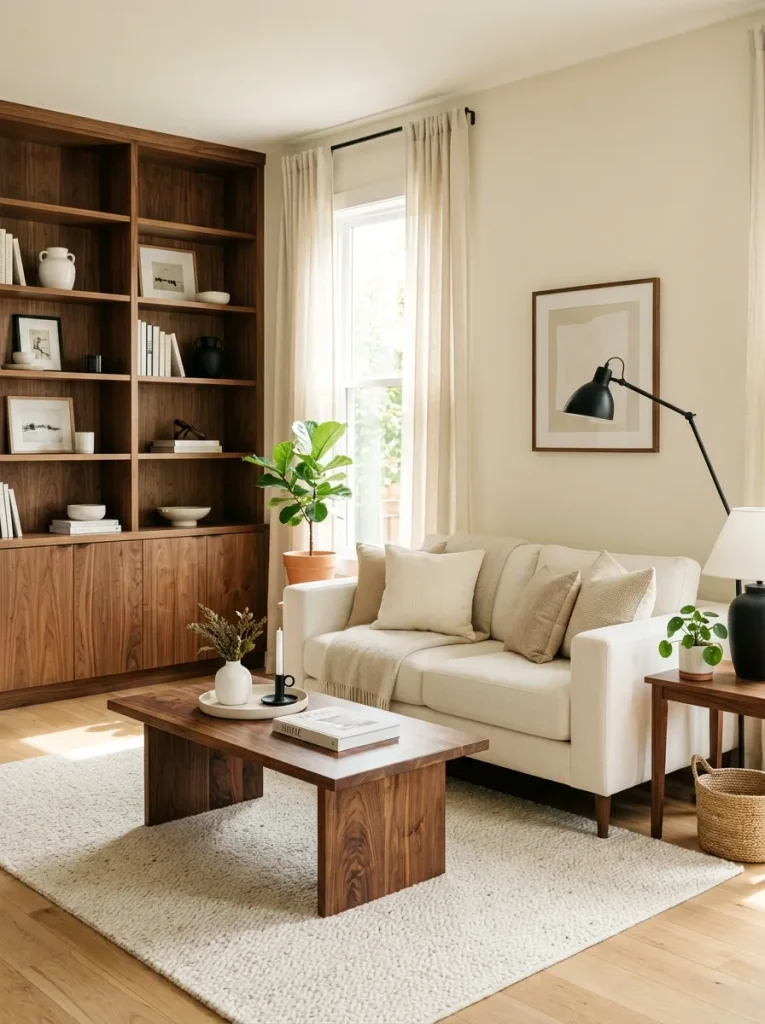
The contrast between walnut and white creates a clean, timeless interior. Use walnut for cabinetry, furniture, shelving, or an accent wall while keeping the walls and larger upholstery pieces white or warm ivory. This prevents the room from becoming visually dark and allows the wood grain to stand out. Add black accents sparingly through lighting, frames, or tables for a more contemporary finish.
6. Warm Minimalist Walnut Living Room
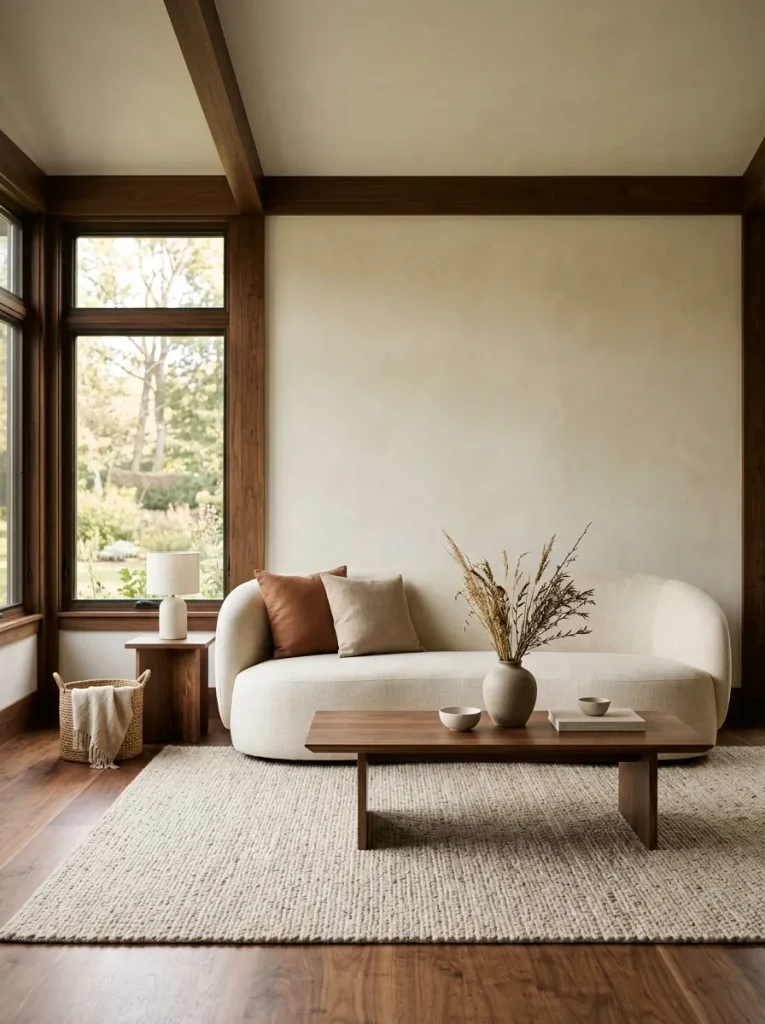
Walnut is an excellent material for warm minimalism because it provides visual interest without requiring lots of decoration. Choose a few high-quality walnut pieces and combine them with simple silhouettes, soft textiles, and a restrained color palette. A low walnut coffee table paired with a sculptural sofa and textured rug can create a calm, sophisticated atmosphere. Keep accessories intentional so the natural beauty of the wood remains one of the room’s main features.
7. Walnut and Marble Combination
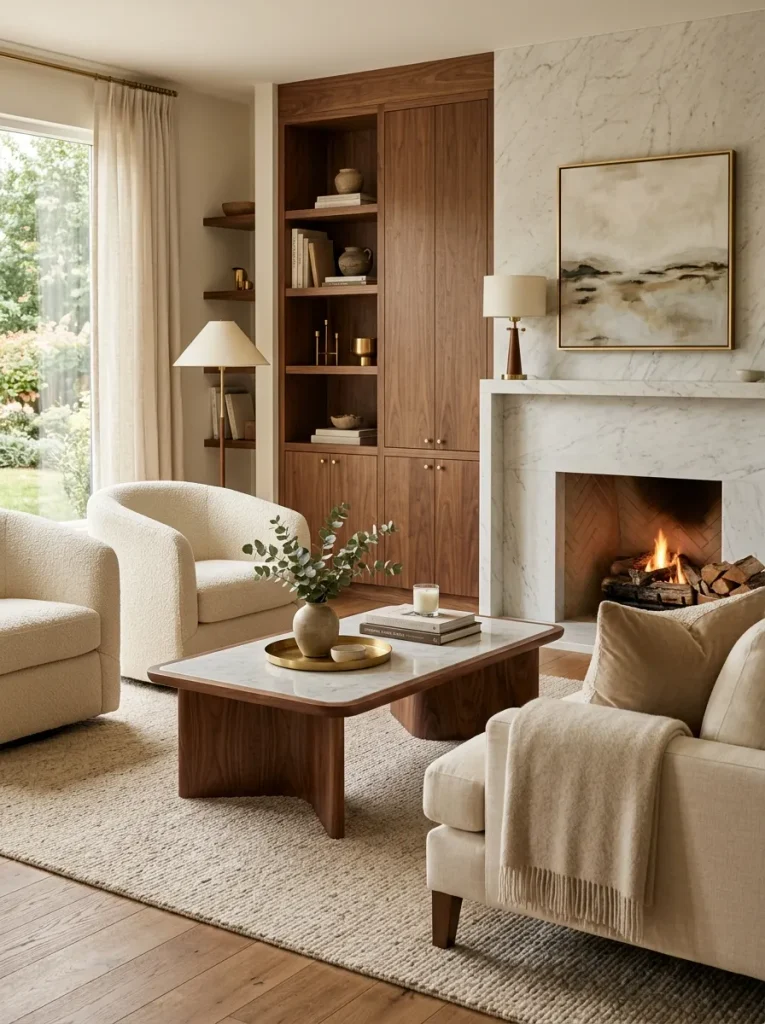
For a more luxurious living room, combine walnut with marble or another natural stone. A walnut coffee table with a marble top, walnut cabinetry beside a stone fireplace, or a walnut console against a marble feature wall can create an elegant material contrast. The warmth of the wood softens the cooler appearance of stone. Cream upholstery and warm metallic lighting can help connect the two materials throughout the space.
8. Walnut Fireplace Wall

A fireplace surrounded by walnut can create a cozy and sophisticated focal point. Consider using walnut panels around the fireplace while keeping the actual fire surround in stone, plaster, or another heat-appropriate material. Built-in shelving on either side can make the composition feel balanced and provide space for decorative objects. Warm lighting and comfortable seating can turn the fireplace area into the natural gathering point of the living room.
9. Mid-Century Modern Walnut Living Room
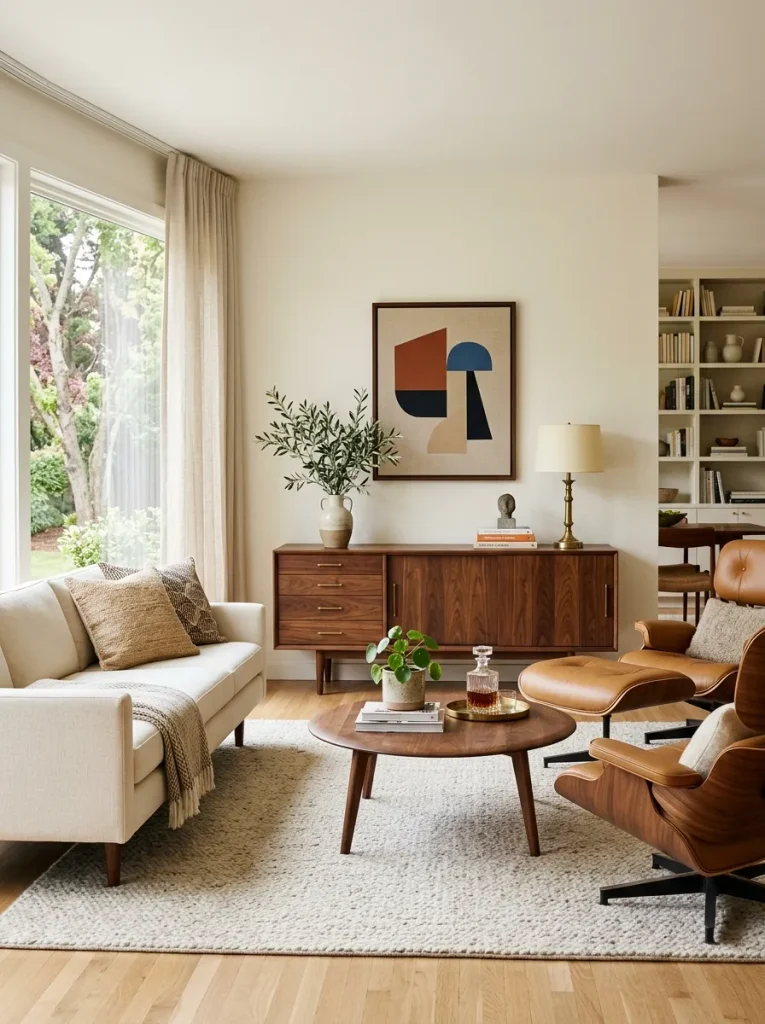
Walnut has a strong connection with mid-century furniture, making it ideal for this interior style. Look for furniture with clean lines, tapered legs, rounded edges, and simple silhouettes. A walnut credenza paired with a low-profile sofa and sculptural lounge chair can create an authentic mid-century-inspired living room. Keep the accessories modern rather than overly retro so the space feels current.
10. Dark Walnut and Neutral Living Room
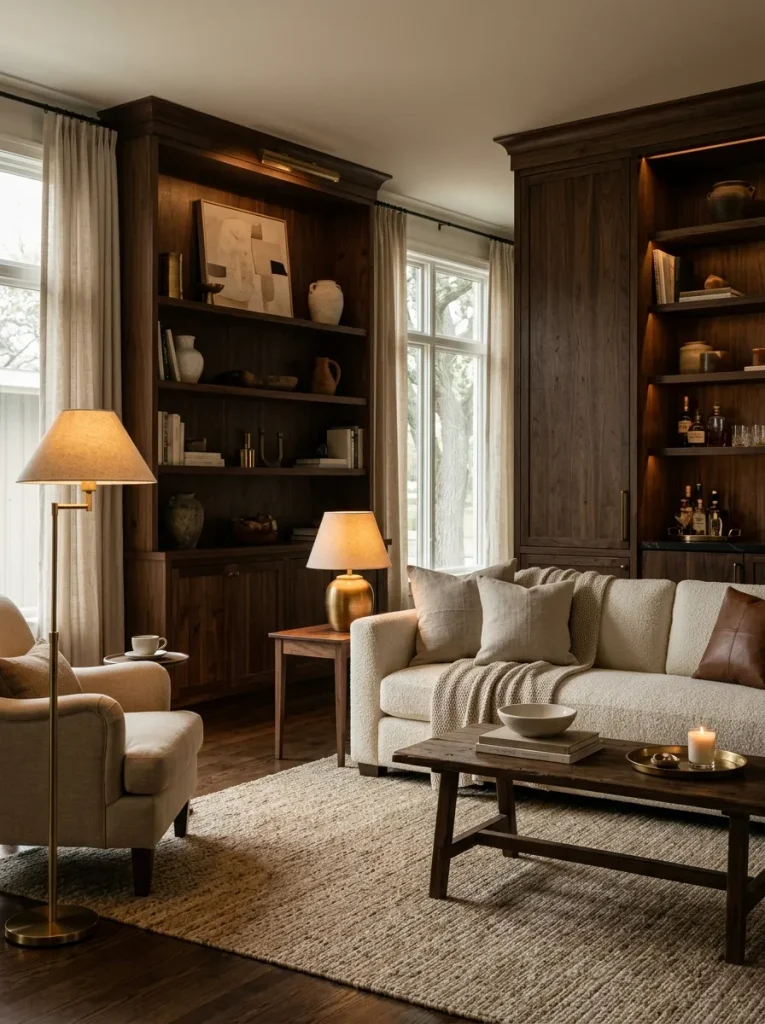
If you love dramatic interiors, use darker walnut finishes with warm neutral colors. A dark walnut wall or large built-in can provide depth, while beige, oatmeal, taupe, and cream furniture keeps the room from feeling too severe. Layering different textures is particularly important in a darker room because linen, boucle, wool, leather, and woven materials can add softness. Warm lamps and indirect lighting will also help the walnut look rich rather than flat.
11. Walnut Paneling Behind the Sofa
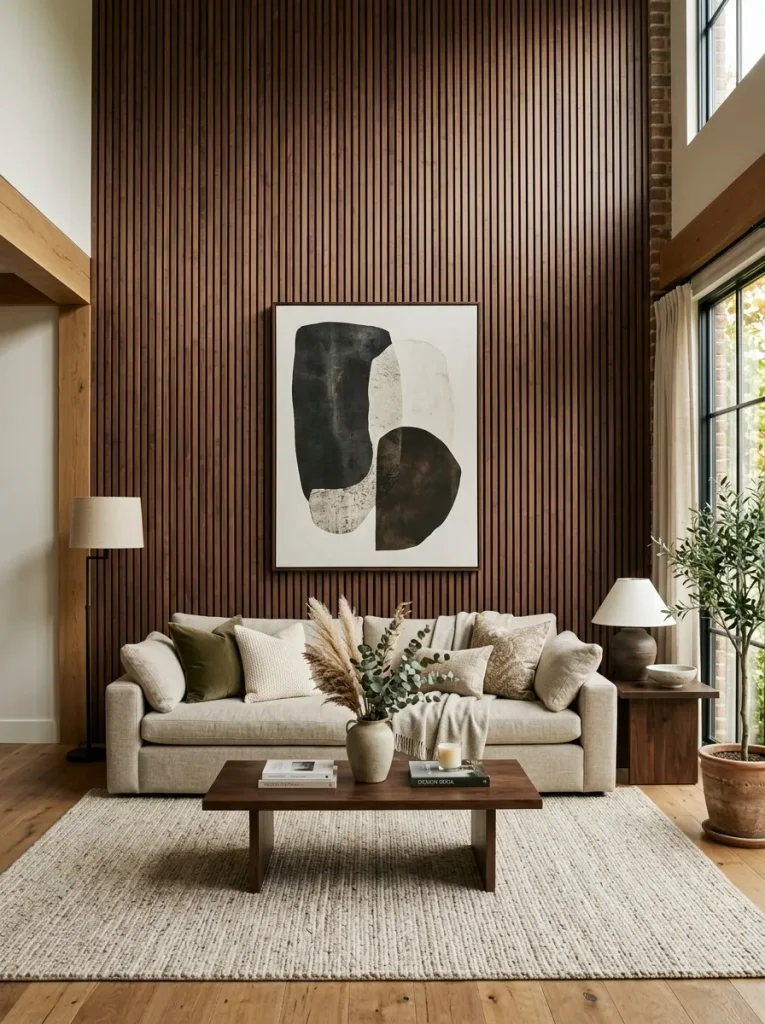
The wall behind the sofa is an ideal location for walnut paneling because it creates a strong visual backdrop without competing with the television. Full-height panels can make the ceiling appear taller, while narrower vertical slats create a lighter contemporary effect. Hang minimal artwork or a single oversized piece rather than covering the entire wood surface. A neutral sofa and textured rug can complete the look while keeping the focus on the architectural wall.
12. Walnut, Leather, and Natural Textures
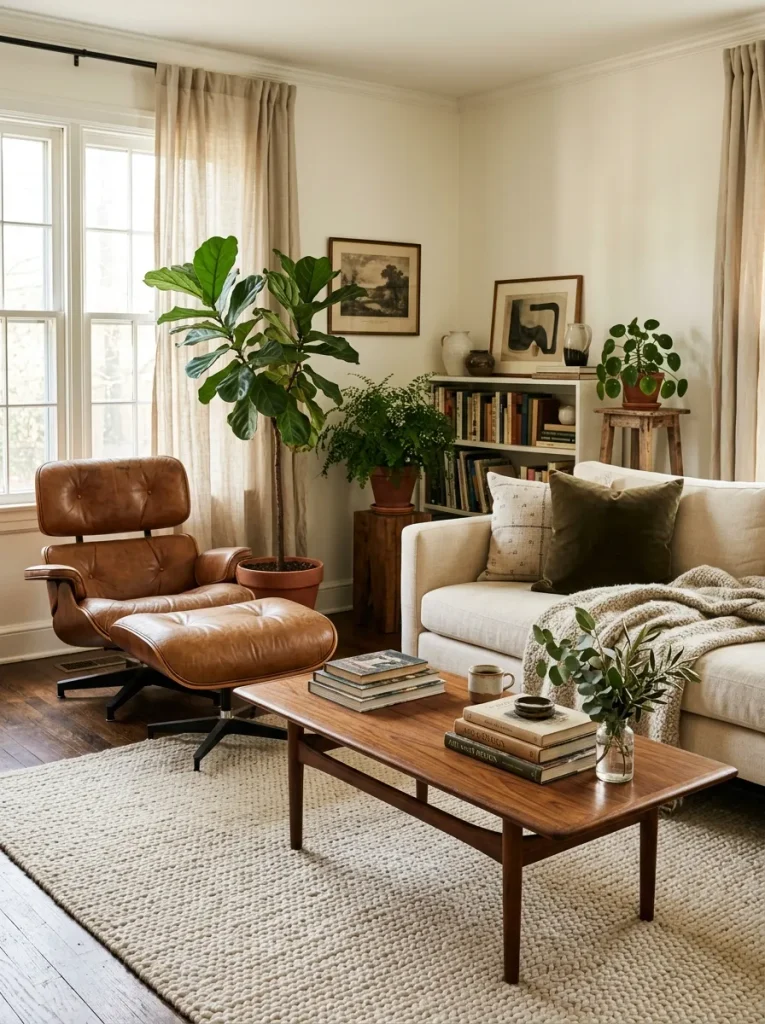
For a warm and sophisticated living room, combine walnut with natural leather, linen, wool, and woven materials. A walnut coffee table with a caramel leather chair can introduce rich layers of brown without making everything look too coordinated. Add an ivory or beige rug, linen curtains, and a few green plants to soften the darker materials. This combination works particularly well for interiors that aim to feel comfortable, collected, and timeless.
How to Style Walnut Without Making the Room Feel Too Dark
One of the most important considerations when decorating with walnut is balance. Because walnut has a naturally deep color, using it alongside lighter surfaces can prevent the room from feeling visually heavy. Cream walls, pale rugs, light upholstery, warm white curtains, and reflective surfaces can all help balance large amounts of wood.
Natural light also makes a major difference. If the living room receives plenty of daylight, you can confidently use walnut on larger surfaces such as walls or built-ins. In a darker room, consider using walnut on furniture or smaller architectural details instead of covering every wall. Layered lighting from ceiling fixtures, floor lamps, table lamps, and wall lighting can make the wood look warm and dimensional after sunset.
What Colors Go Best With Walnut Wood?
Walnut is versatile enough to work with many color palettes. Warm white and cream create a timeless combination, while beige and taupe produce a softer monochromatic look. Sage green, muted blue, terracotta, and dusty rose can introduce subtle color without competing with the natural wood tones.
For a more dramatic interior, walnut can also be paired with charcoal, black, deep green, or burgundy. Metallic finishes such as aged brass and brushed bronze can add warmth and sophistication. The key is to repeat selected colors throughout the room so the walnut feels integrated rather than isolated.
Choosing Walnut Furniture for a Living Room
When selecting walnut furniture, consider the scale and visual weight of each piece. A large dark walnut sectional table or media cabinet can become a significant focal point, so balance it with lighter upholstery and open space around it. Smaller walnut pieces such as side tables, shelving, or a console can introduce the material without dominating the room.
Pay attention to the wood finish as well. A matte or satin finish often gives walnut a more contemporary appearance, while highly polished surfaces can create a more formal look. Whenever possible, choose pieces where the natural grain remains visible because this is one of the characteristics that makes walnut furniture so visually appealing.
Final Thoughts
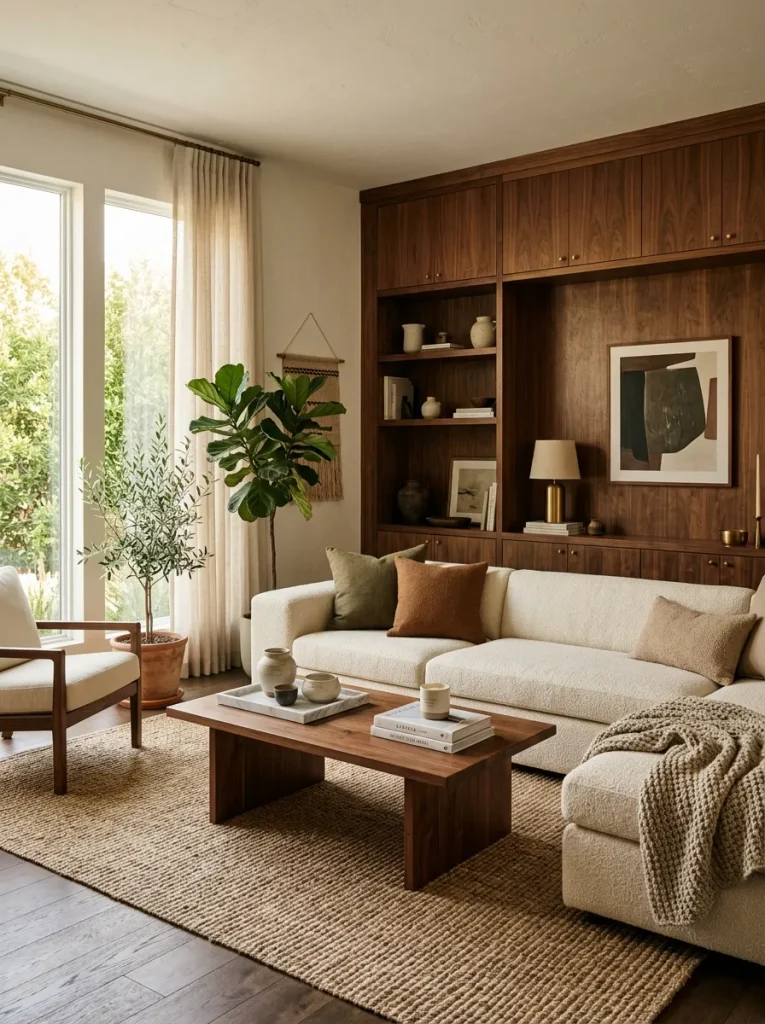
A walnut interior design living room can be warm, modern, elegant, or cozy depending on how the wood is incorporated. From statement walls and built-in media units to simple walnut furniture paired with cream upholstery, there are many ways to make this rich material work for your space. The most successful designs usually balance walnut’s deeper tones with lighter fabrics, natural textures, thoughtful lighting, and enough open space. Whether you prefer minimalist interiors or a more luxurious look, walnut can provide a timeless foundation that makes a living room feel both sophisticated and inviting.