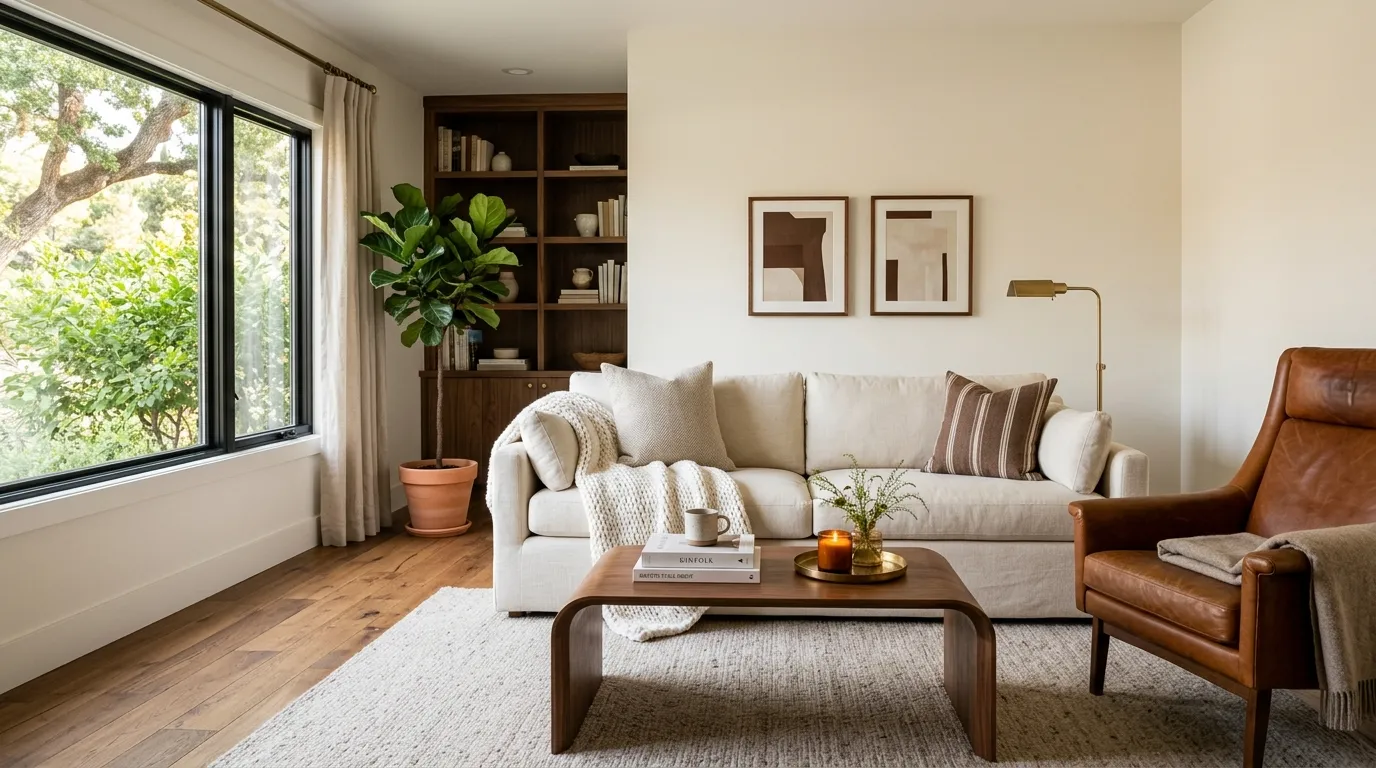
White and Brown Interior Design Living Rooms: 12 Warm and Stylish Ideas
White and brown interior design living rooms create a timeless combination that feels both fresh and warm. The white keeps the space bright and open, while brown furniture, wood tones, and earthy accents add depth without making the room feel heavy. This color pairing works beautifully with modern, traditional, farmhouse, Scandinavian, and organic interior styles. Whether you are redesigning a large family room or refreshing a small apartment, these ideas can help you create a balanced and inviting space.
1. White Walls With Brown Leather Furniture
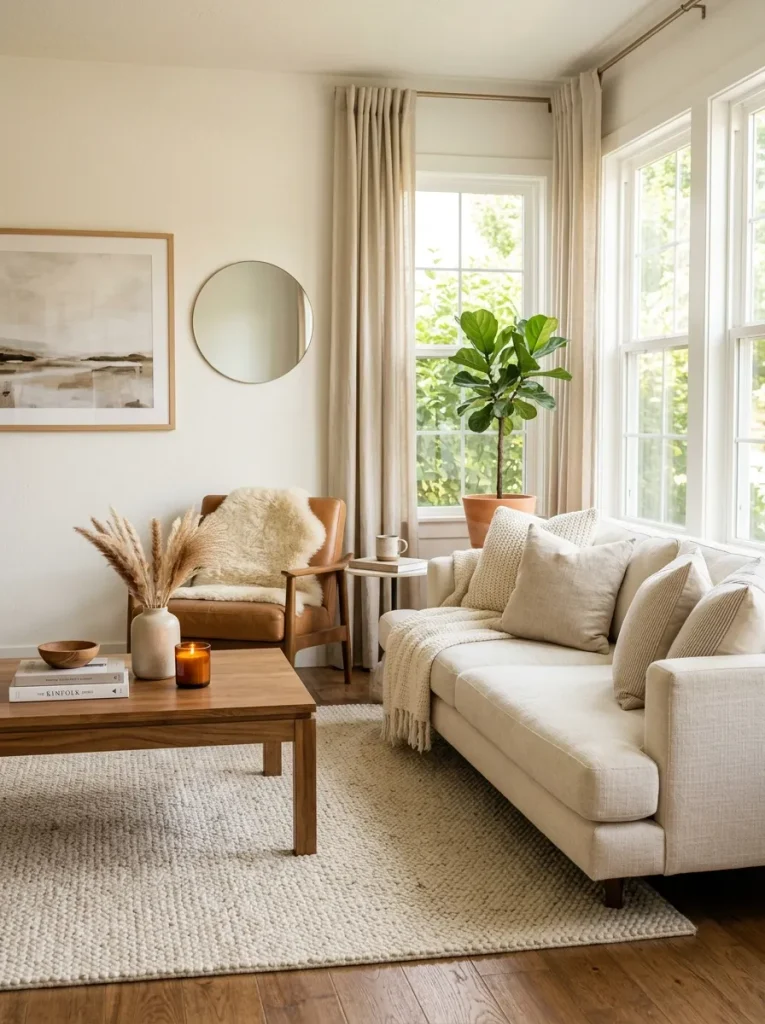
One of the easiest ways to create a sophisticated white and brown living room is to pair crisp white walls with rich brown leather furniture. A caramel or cognac leather sofa immediately introduces warmth while keeping the overall palette neutral and versatile. Add a light-colored area rug, cream curtains, and a natural wood coffee table to soften the contrast. A few black or brass accents can provide definition without competing with the main color scheme.
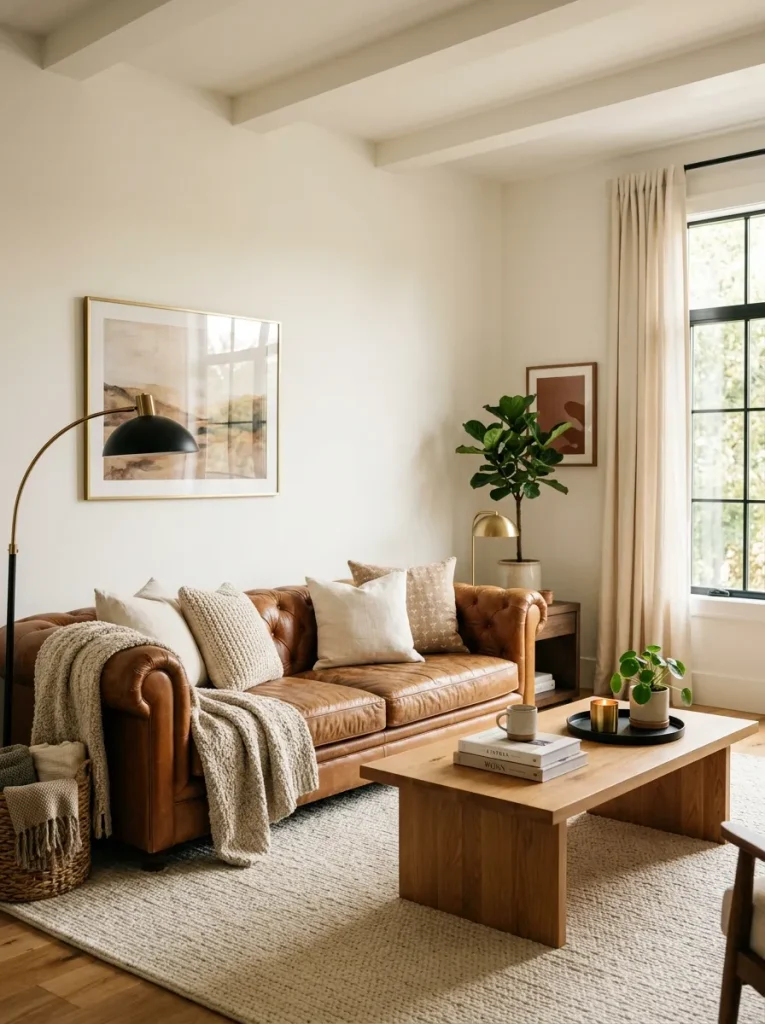
The key is to avoid using exactly the same brown everywhere. Combining caramel leather with medium-toned wood and darker brown accessories creates subtle layers throughout the room. Cream-colored cushions can connect the furniture to the walls, while textured throws make the seating area feel more comfortable. This approach is particularly effective if you want your living room to feel elegant but still relaxed.
2. Brown Wood Furniture Against White Walls
Natural wood is one of the most beautiful ways to bring brown into a predominantly white living room. Choose a wooden coffee table, media console, shelving unit, or side tables with visible grain for an organic appearance. White walls provide a clean backdrop that allows the wood furniture to become a visual feature. Add an ivory sofa and neutral textiles to keep the room feeling bright.

For a more modern result, select furniture with simple silhouettes and minimal hardware. If you prefer a traditional interior, darker walnut furniture can create a richer and more formal atmosphere. Mixing two or three related wood tones can also work, provided the undertones complement each other. The result is a living room that feels warm and collected rather than overly coordinated.
3. Cozy White and Chocolate Brown Living Room
Chocolate brown is a great choice if you want your living room to feel cozy and sophisticated. Use warm white walls or upholstery as the lighter foundation, then introduce deep brown through a sofa, accent chair, rug, or curtains. Because chocolate brown is visually strong, balance it with plenty of lighter surfaces. Soft cream pillows and a textured ivory rug can prevent the room from feeling too dark.
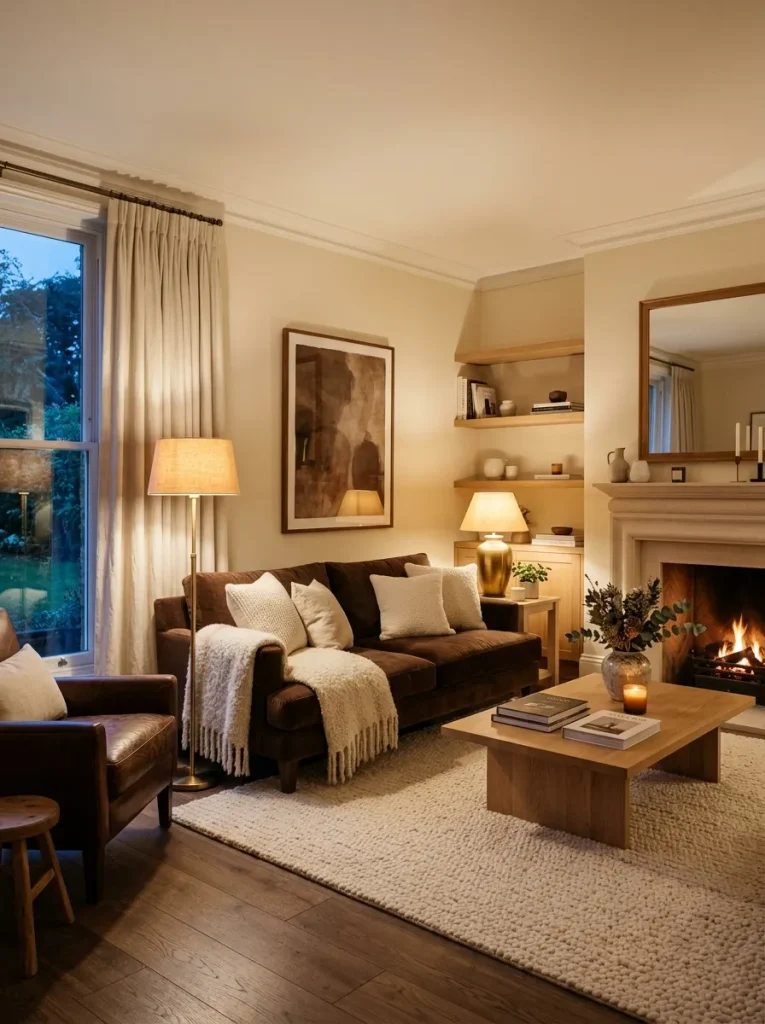
Lighting becomes especially important with deeper brown shades. Use warm lamps, floor lighting, and natural daylight to bring out the richness of the furniture. A few lighter wood pieces can bridge the contrast between white and dark brown. This combination works especially well in larger living rooms where deeper colors can be used without overwhelming the space.
4. Modern White and Brown Living Room
For a modern white and brown interior, focus on clean lines, restrained decoration, and a carefully edited color palette. Start with white walls and a streamlined cream or white sofa, then add brown through a wood coffee table, leather chair, or low-profile media console. Keep decorative objects simple and choose materials such as wood, stone, linen, and ceramic. This gives the room warmth without losing its contemporary appearance.
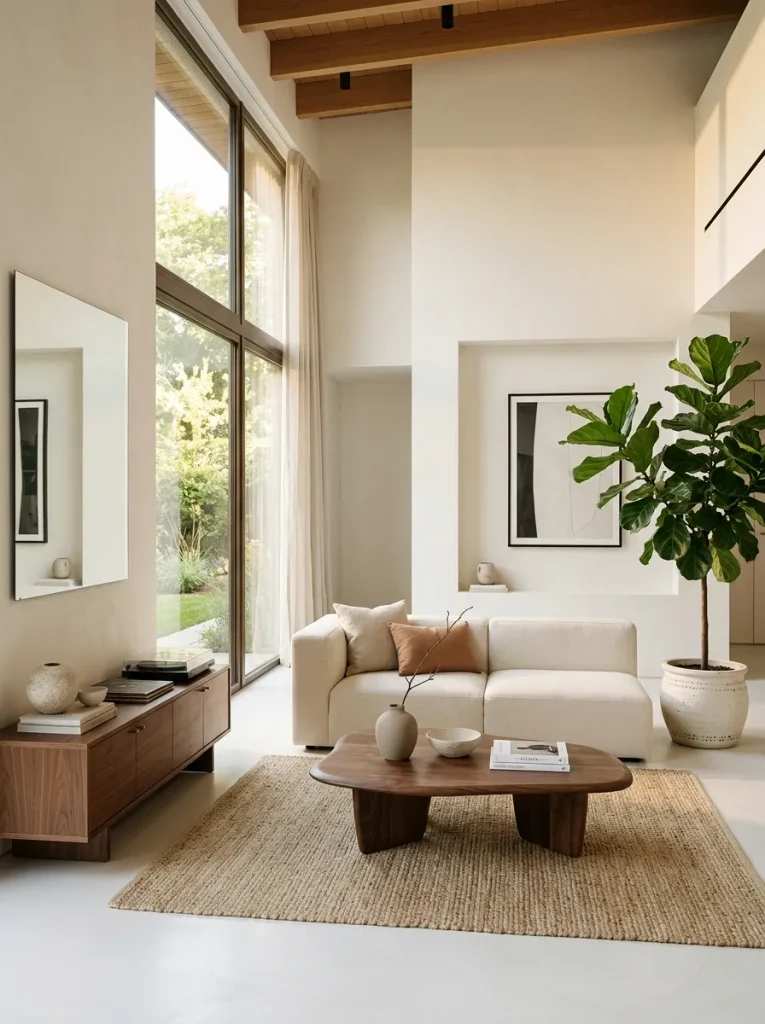
Avoid filling the room with too many small brown accessories. Instead, use a few larger elements to establish the color relationship. A large wooden coffee table or brown accent chair can have more visual impact than numerous small decorations. Add greenery for a natural touch and allow some empty space around the furniture to preserve the modern feeling.
5. White Sofa With Brown Accent Chairs
If you already have a white sofa, adding brown accent chairs is an easy way to introduce warmth. Choose leather, woven fabric, boucle, or linen depending on the style of your home. Position the chairs opposite or beside the sofa to create a balanced conversation area. A brown-and-cream patterned rug can visually connect the two colors.
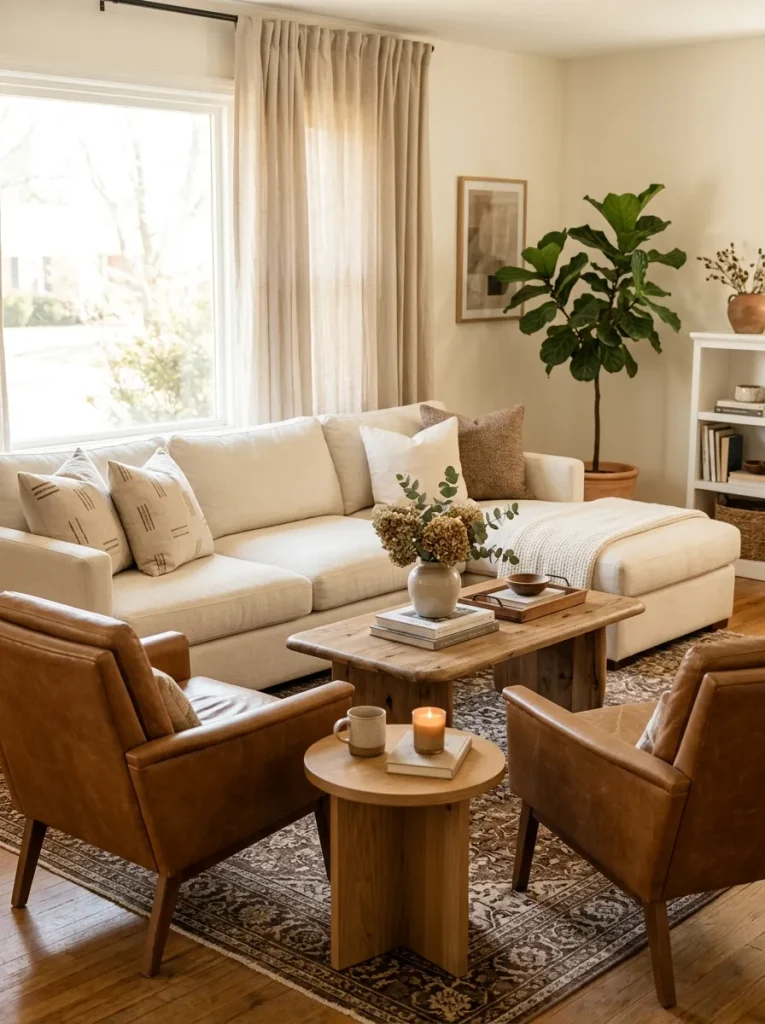
For a softer look, choose medium caramel or tan chairs instead of very dark brown. Dark chocolate chairs create stronger contrast and a more dramatic appearance. Add pillows that contain both white and brown to make the furniture feel intentionally connected. A wooden side table between the chairs can complete the arrangement.
6. White and Brown Organic Living Room
An organic living room is naturally suited to a white and brown color palette. Use warm white walls, natural wood furniture, linen upholstery, woven baskets, jute rugs, and earthy brown accessories to create a relaxed environment. Rather than relying on one specific shade of brown, incorporate several natural wood and earth tones. This creates the layered appearance often associated with organic interiors.
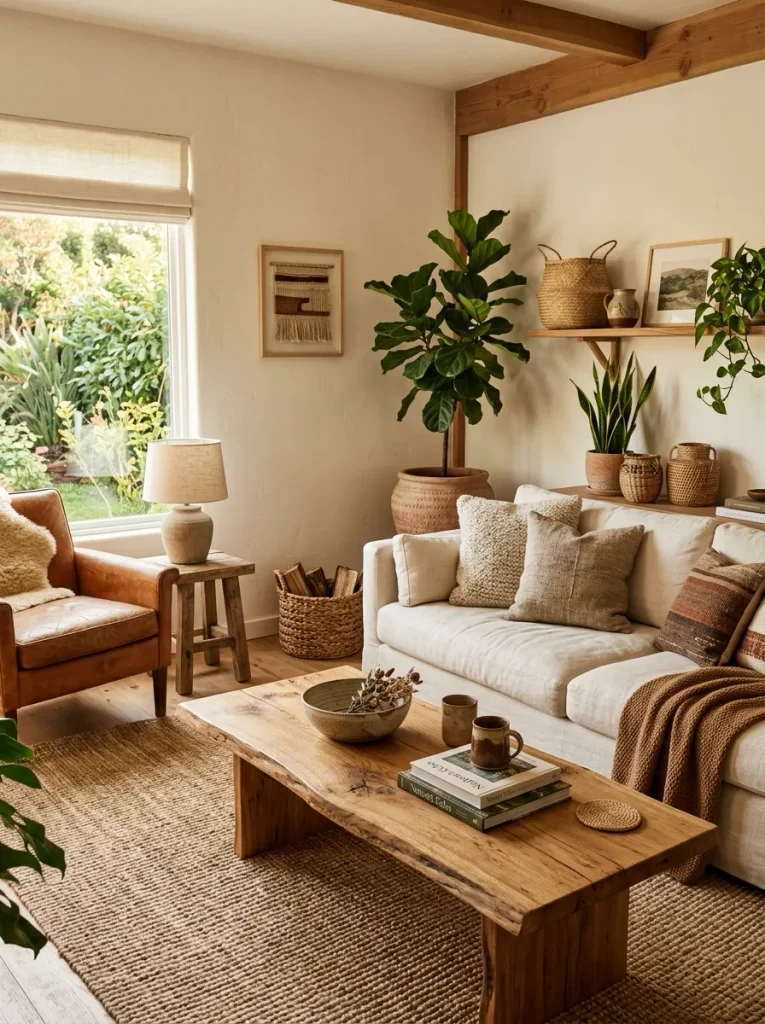
Texture is particularly important in this style. Combine smooth ceramics with rough wood, woven materials, soft linen, and textured rugs. Large leafy plants can add another natural element without introducing a complicated color scheme. The finished room should feel comfortable, understated, and connected to natural materials.
7. White and Brown Farmhouse Living Room
White and brown are classic farmhouse colors, especially when paired with rustic wood and comfortable upholstery. Start with warm white walls and add a brown wood coffee table, exposed wood details, or a reclaimed-wood console. A cream sofa with neutral cushions keeps the room bright while brown furniture supplies the farmhouse warmth. Vintage-inspired accessories can add personality without making the room look cluttered.
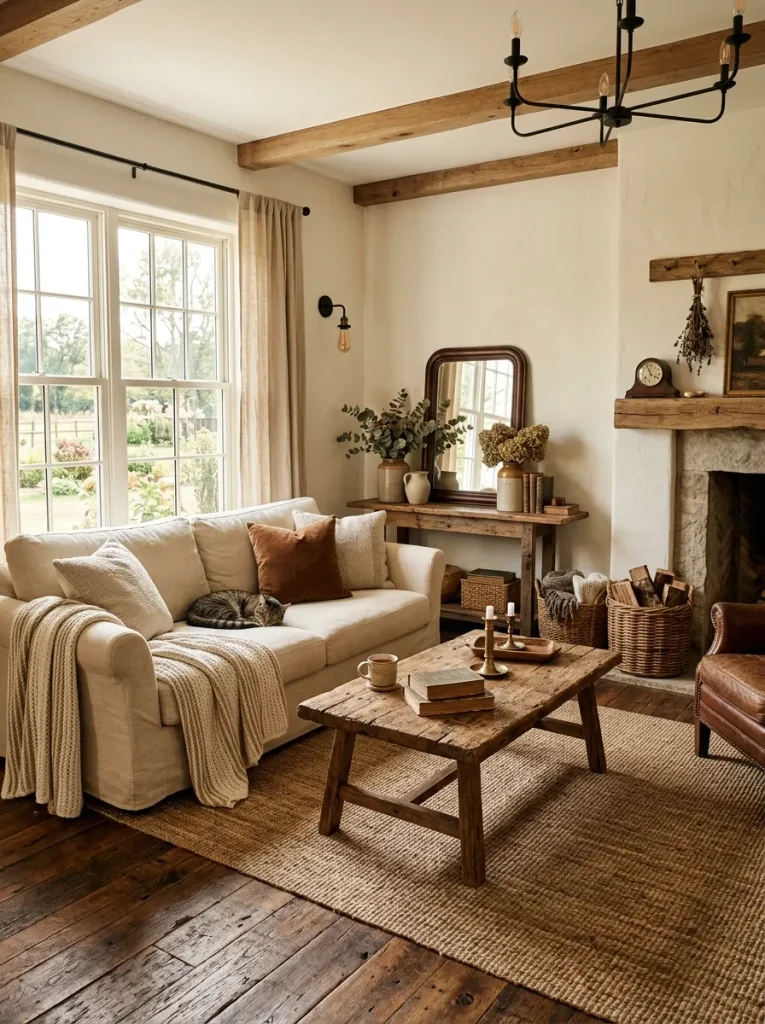
Choose materials that have visible texture and character rather than perfectly polished finishes. Woven baskets, linen curtains, cotton throws, and distressed wood can all contribute to the farmhouse atmosphere. Black metal lighting or hardware can provide a small amount of contrast. Keep the decorative palette restrained so the natural materials remain the focus.
8. White and Brown Scandinavian Living Room
Scandinavian interiors often use light colors and natural wood, making white and brown an excellent combination. Choose white walls and light upholstery, then introduce pale or medium brown wood through furniture and accessories. A simple wooden coffee table and streamlined shelving can provide enough warmth without visually crowding the room. Keep the rest of the decor minimal and functional.
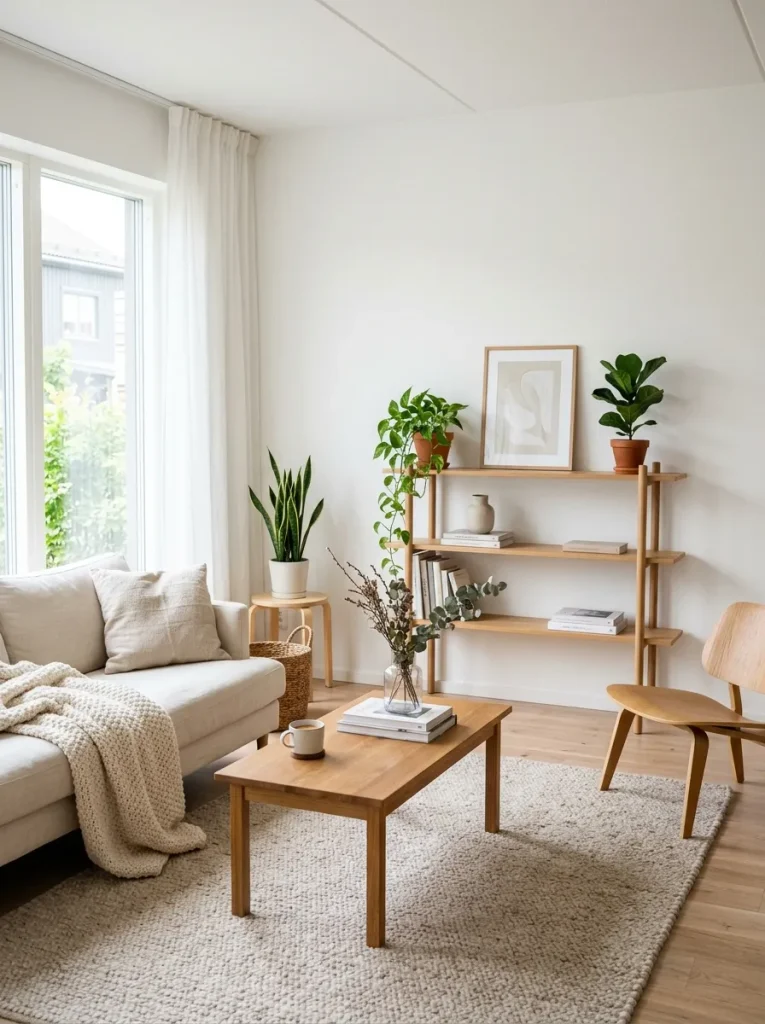
Soft textiles are useful for preventing a white room from feeling cold. Add a cream knit throw, textured cushions, and a soft neutral rug around the seating area. A few plants can bring freshness while maintaining the understated aesthetic. The finished room should feel bright, practical, warm, and uncluttered.
9. White Walls With a Brown Accent Wall
A brown accent wall can create a dramatic focal point while allowing the rest of the living room to remain light. Consider a warm chocolate, taupe-brown, coffee, or earthy brown shade depending on the amount of contrast you want. Place the main sofa, artwork, or media console against the accent wall to make it part of the room’s visual composition. Keep surrounding walls white or warm ivory so the darker wall does not dominate the entire space.
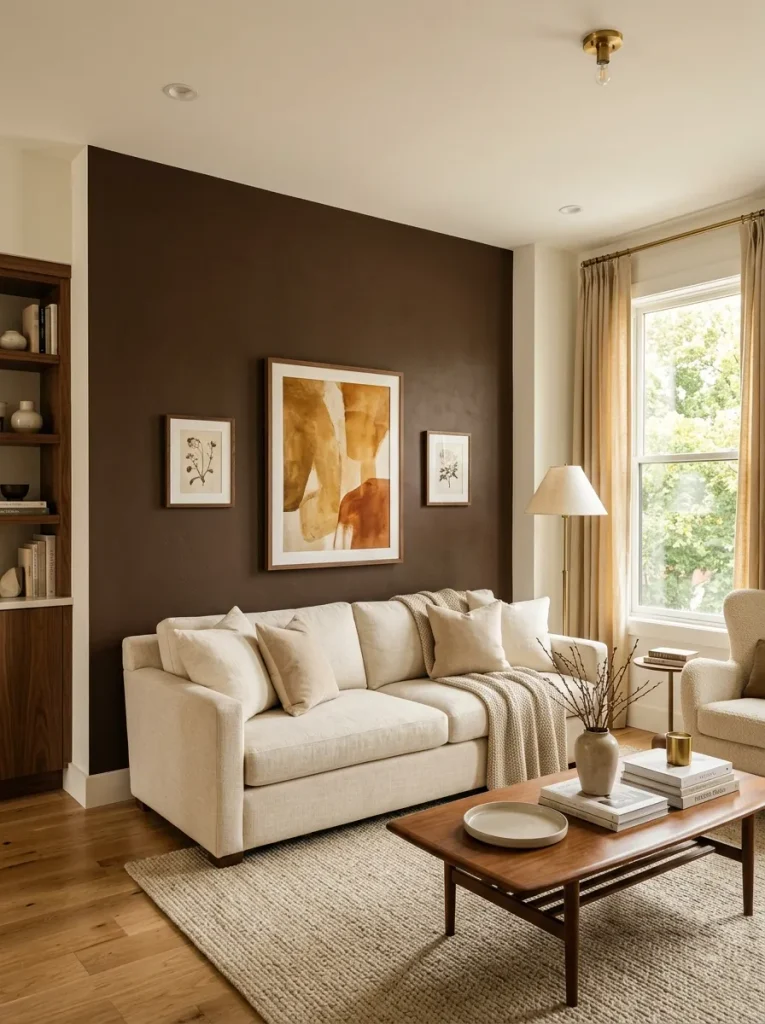
If paint feels too permanent, brown wood paneling can create a similar effect with additional texture. Vertical wood slats can emphasize ceiling height, while wide wood panels can create a more traditional appearance. Pair the feature wall with cream furniture and lighter flooring for balance. Warm lighting will make the brown surface feel especially inviting in the evening.
10. Brown and White Minimalist Living Room
Minimalism does not mean the room has to feel plain. A white and brown minimalist living room can be warm and sophisticated when the focus is placed on proportion, texture, and quality materials. Use a simple white sofa, a sculptural brown wood coffee table, and one or two carefully selected accent pieces. Keep unnecessary decorative objects off surfaces so the furniture and architecture have room to stand out.
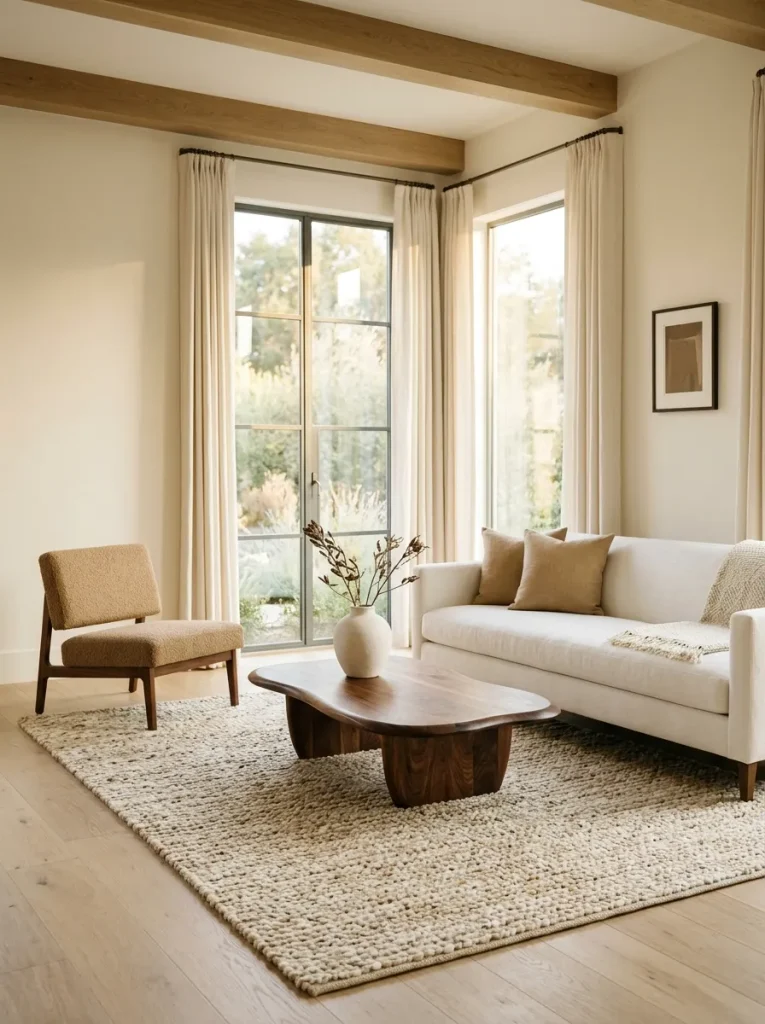
Instead of adding many colors, use variations of white, cream, beige, tan, and brown. A textured rug can add interest without breaking the restrained palette. Natural wood introduces warmth while maintaining the minimalist aesthetic. Large windows and plenty of natural light can further enhance the calm atmosphere.
11. White and Brown Living Room With a Fireplace
A fireplace provides a natural focal point for a white and brown living room. Keep the fireplace surround light and introduce brown through the mantel, built-in shelving, wood storage, or furniture. A brown leather sofa positioned toward the fireplace can make the space feel especially cozy. For a softer arrangement, use a cream sectional with brown pillows and a wooden coffee table.
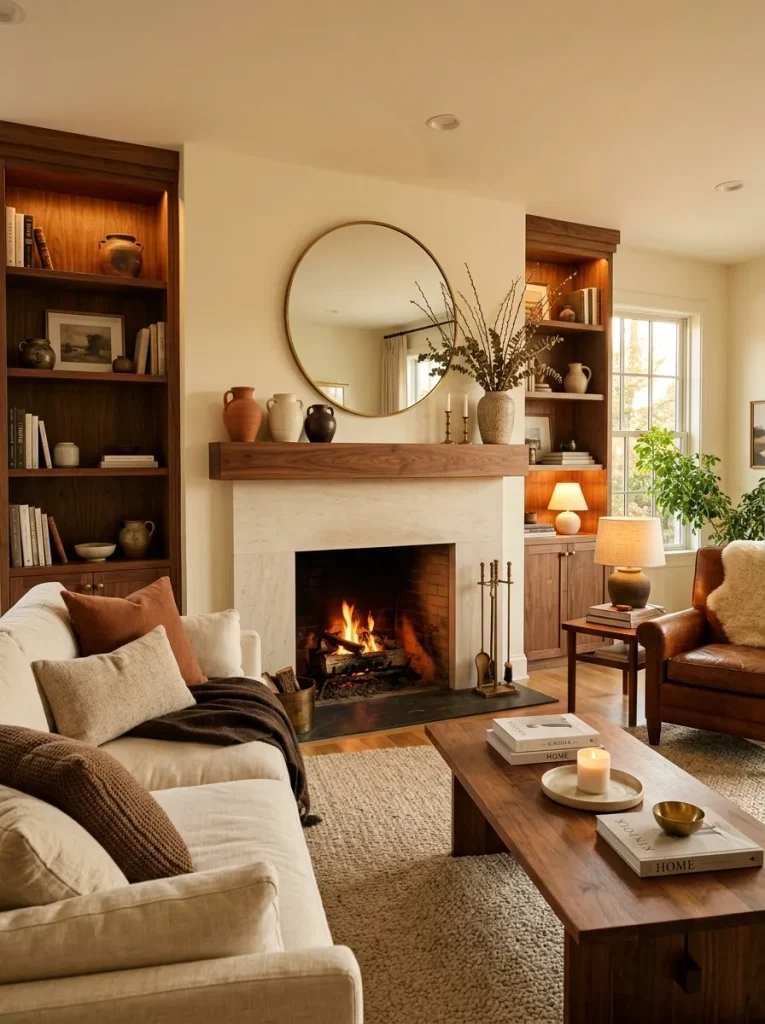
Decorate the mantel sparingly so the fireplace remains the visual centerpiece. A large mirror, neutral artwork, ceramic vessels, or a few natural branches can work beautifully against a white or brown surround. If the fireplace has a dark interior, repeat that darker shade in small accents elsewhere in the room. This creates visual continuity without making the space feel overly matched.
12. Elegant White and Brown Living Room
For an elevated white and brown interior, combine refined materials with a restrained color palette. Think creamy upholstery, dark walnut furniture, soft brown curtains, marble surfaces, and understated metallic details. A large neutral rug can anchor the seating arrangement while creating a soft transition between the white and brown elements. Choose fewer decorative pieces, but make each one visually intentional.
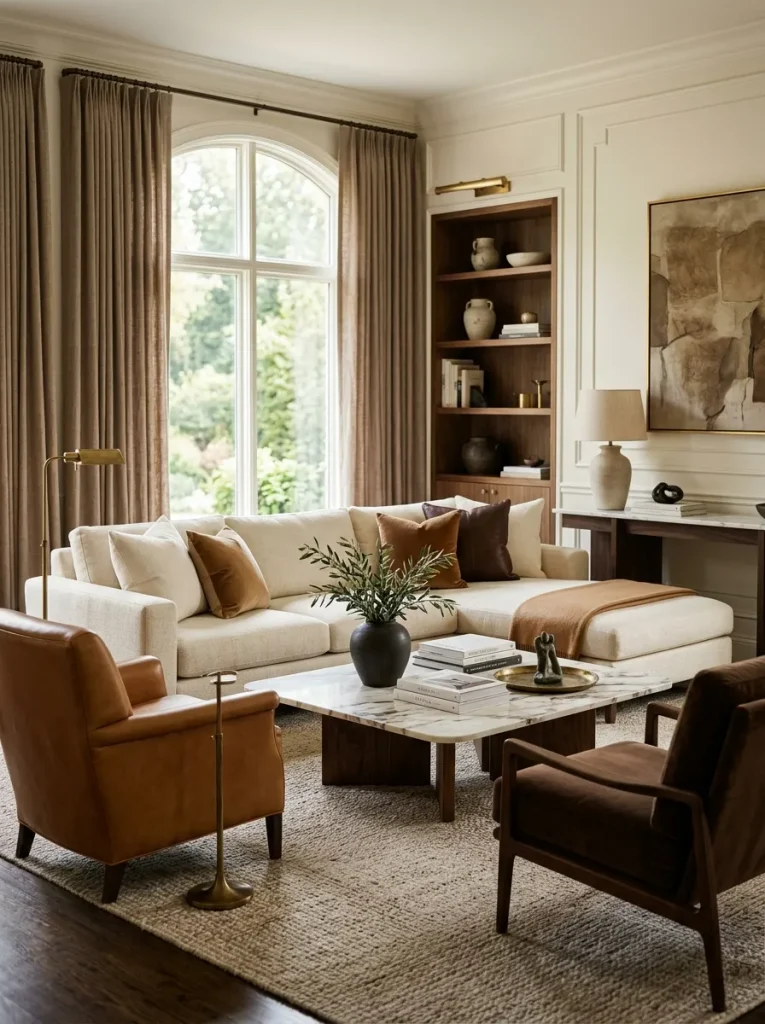
Layering different shades is what keeps an elegant neutral room from looking flat. Combine ivory with warm white, tan with caramel, and walnut with deeper chocolate brown. Add subtle brass or aged-metal accents for additional dimension. The finished living room can feel luxurious without relying on excessive decoration.
How to Balance White and Brown in a Living Room
The easiest way to make this color combination work is to treat white as the visual foundation and brown as the warmth and contrast. White can appear on walls, larger upholstery, ceilings, or rugs, while brown can be introduced through furniture, wood, leather, textiles, and accessories. You do not need to divide the colors equally. In many interiors, using mostly white and adding several carefully chosen brown elements creates a more spacious appearance.
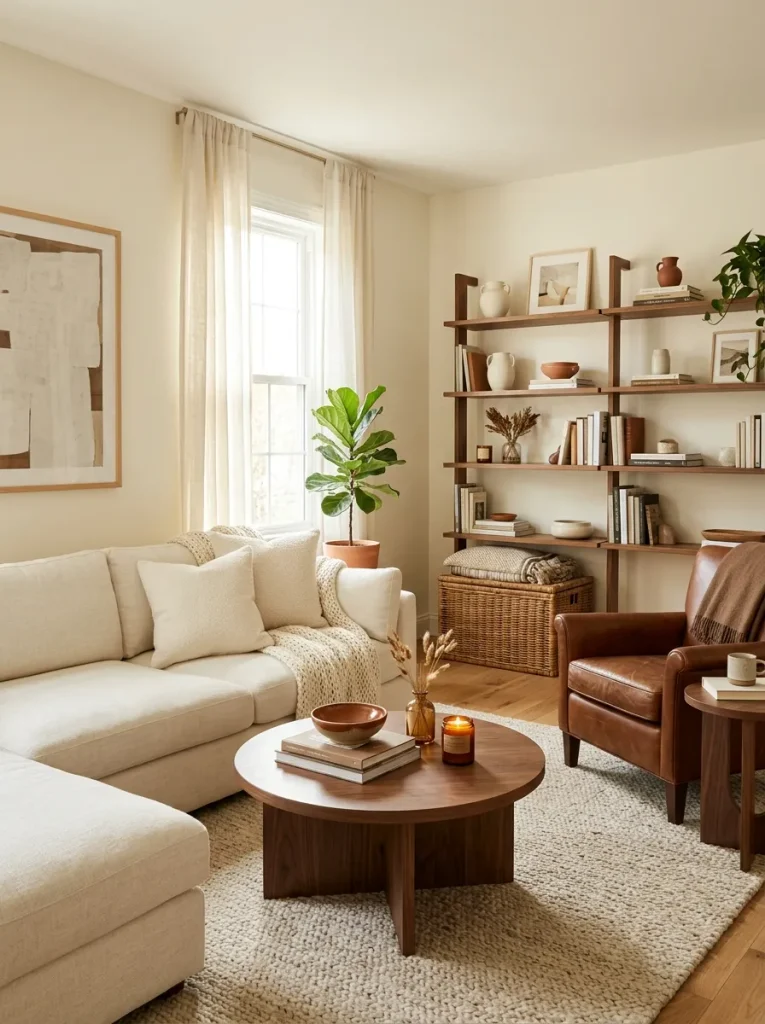
Pay attention to undertones as well. Warm white generally works beautifully with warm woods, caramel, tan, and chocolate brown, while cooler whites may pair better with gray-brown or more neutral wood tones. If the room contains several different materials, repeat the main brown tone in at least two or three places. This helps the palette feel connected without becoming repetitive.
Final Thoughts

White and brown interior design living rooms offer an easy way to combine brightness with warmth. From white walls and brown leather furniture to organic wood tones, chocolate accents, farmhouse details, and elegant walnut pieces, the palette can adapt to many different interior styles. The most successful rooms usually rely on layers of texture and slightly different shades rather than using one white and one brown everywhere. With thoughtful furniture choices, natural materials, and warm lighting, this timeless combination can create a living room that feels both stylish and genuinely comfortable.